Bludit
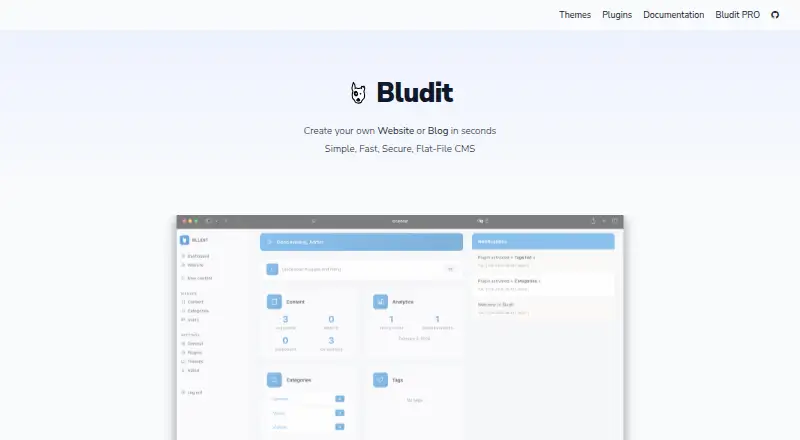
What Bludit is
Bludit is a free, self-hosted flat-file CMS for creating a website or blog. It stores content in JSON files, so a database installation or configuration is not needed. Writers can use Markdown or HTML, with Markdown and WYSIWYG editors available. Editorial workflows, custom content types and built-in SEO tools are supported. Themes and plugins from Bludit’s official directories provide ways to customize and extend a site. Bludit describes itself as privacy-first and says it does not track visitors. Running it requires a web server with PHP support; the documentation specifies PHP 8.0 or higher and several PHP modules. Installation guidance covers uploading the software to a server, Docker and the PHP built-in web server. The plugin directory includes a GitHub Comments option using Utterances and a GitHub Sync option for exporting articles to a repository. Administrators can consult Nginx instructions for restricting direct access to specified directories and configuring HTTPS. Help is available through the support forum and GitHub issues. Optional PRO plugins are available from the $2 Patreon tier and above.
Who it suits
Bludit suits people who want to host a website or blog without setting up a database. Its PRO page names agencies, freelancers, developers and self-hosters as intended users.
What it does well
- Stores content in JSON without a database.
- Includes Markdown and WYSIWYG editors.
- Built-in SEO tools are available.
- Bludit says it does not track visitors.
What to know first
- Requires a PHP-capable web server.
- Documentation specifies PHP 8.0 or higher and modules.
- Self-hosted setup requires server deployment.
Plans
| Plan | Billed and limits | Price |
|---|---|---|
| Bludit | Free and open-source CMS | Free |
| Bludit PRO | Available from the $2 tier and above on Patreon · Access to all PRO plugins: White Labeling · Time Machine · Backup Manager · Gallery | $2 |
As bludit.com lists them, read 12 Oct 2026. The maker's own page has the final word.
Getting started
- Choose a server with PHP support and meet the documented PHP and module requirements.
- Get Bludit from its website.
- Upload it to a server, or follow the Docker or PHP built-in web server installation route.
- Use the Markdown or WYSIWYG editor to create content.
- Consult the support forum or GitHub issues if you need help.
Verdict
Bludit offers a free flat-file CMS with editorial, SEO and customization features. It requires PHP hosting, while optional PRO plugins are available from the $2 Patreon tier and above.
Questions
Is Bludit free?
The Bludit plan is free and open-source, listed as free.
What does Bludit PRO cost?
Bludit PRO is priced on request. Access to its plugins is available from the $2 Patreon tier and above.
What platforms does Bludit support?
Its listed platforms are Linux, self-hosted, and web. It requires a web server with PHP support.
Does Bludit need a database?
No. It stores content in JSON files, so database installation or configuration is not needed.
Is Bludit open source?
Yes. The free Bludit plan is described as a free and open-source CMS.
What comes with Bludit PRO?
The PRO tier provides access to White Labeling, Time Machine, Backup Manager, and Gallery plugins.
Facts from Bludit's own pages
- Content storage
- It stores content in JSON files, so no database installation or configuration is needed. · bludit.com, 12 Oct 2026
- Custom content types
- Yes · bludit.com, 22 Sept 2026
- Deployment
- The installation guide describes uploading the software to a server and also documents Docker and the PHP built-in web server. · docs.bludit.com, 12 Oct 2026
- Editorial workflows
- Yes · bludit.com, 22 Sept 2026
- Free plan
- Yes · bludit.com, 22 Sept 2026
- Hosting requirements
- The documentation says Bludit needs a web server with PHP support and lists PHP 8.0 or higher and several PHP modules as requirements. · docs.bludit.com, 12 Oct 2026
- Integrations
- The official plugin directory lists a GitHub Comments plugin using Utterances and a GitHub Sync plugin that exports articles to a repository. · plugins.bludit.com, 12 Oct 2026
- Platform type
- self_hosted · bludit.com, 22 Sept 2026
- Privacy
- Bludit describes itself as privacy-first and says it does not track visitors. · bludit.com, 12 Oct 2026
- PRO audience
- The PRO page names agencies, freelancers, developers, and self-hosters as intended users. · pro.bludit.com, 12 Oct 2026
- Purpose
- Bludit is a flat-file CMS for creating a website or blog. · bludit.com, 12 Oct 2026
- Security configuration
- The Nginx guide instructs administrators to block direct access to specified content and kernel directories and documents HTTPS configuration. · docs.bludit.com, 12 Oct 2026
- SEO
- The product page says Bludit includes built-in SEO tools. · bludit.com, 12 Oct 2026
- SEO tools
- Yes · bludit.com, 22 Sept 2026
- Support
- The homepage directs users to the support forum and GitHub issues for help. · bludit.com, 12 Oct 2026
- Themes and plugins
- Users can extend and customize Bludit with themes and plugins listed on its official directories. · bludit.com, 12 Oct 2026
- Writing
- It supports Markdown and HTML and includes Markdown and WYSIWYG editors. · bludit.com, 12 Oct 2026
Where Bludit stands on Freedom251
- Blog Software#3 of 25
- Blogging Platforms#23 of 125
- Content Management Systems#99 of 165