Freedom251 › Social Media APIs

AT Protocol
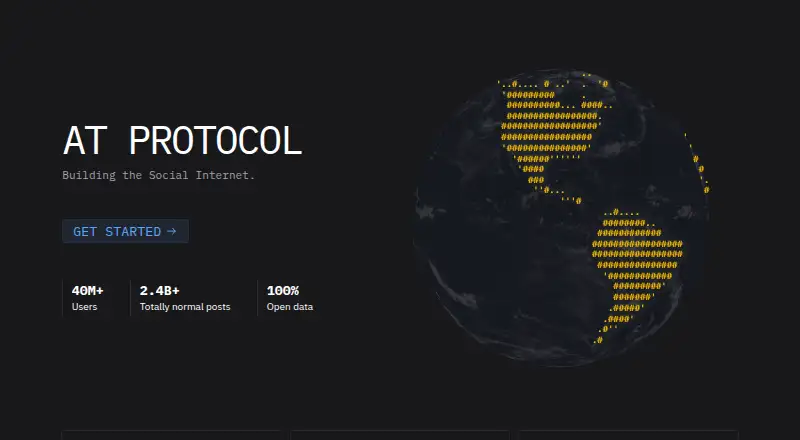
Facts from AT Protocol's own pages
- App passwords
- Accounts can create and revoke app passwords separately from their primary password. · atproto.com, 7 Oct 2026
- Authentication
- Applications can use OAuth, while single-purpose apps such as bots or command-line tools may use password authentication. · atproto.com, 7 Oct 2026
- Authorization
- OAuth is the primary mechanism for clients to make authorized requests to PDS instances, including mobile, browser, desktop, and web service clients. · atproto.com, 7 Oct 2026
- Cryptography
- AT Protocol uses public key cryptography to authenticate public data; protocol-level data encryption is not used, though many components use TLS. · atproto.com, 7 Oct 2026
- Data model
- Users publish JSON records into repositories, and changes to those records sync across the network to drive applications. · atproto.com, 7 Oct 2026
- Developer support
- The official site links to tutorials, SDKs, a cookbook, deployment guidance, and community discussions on GitHub. · atproto.com, 7 Oct 2026
- Developer use
- Developers can build feeds, bots, search engines, and applications using the public firehose, with no API key required. · atproto.com, 7 Oct 2026
- Hosting limits
- Operating a relay is bandwidth intensive, while hosting an AppView is resource intensive. · atproto.com, 7 Oct 2026
- Identity
- Usernames can be domains, and account portability is supported through signed data repositories and DIDs. · atproto.com, 7 Oct 2026
- Intended users
- The protocol is aimed at developers building social applications, agents, custom feeds, and other services using shared network data. · atproto.com, 7 Oct 2026
- Limited permissions
- OAuth lets developers request limited account access without requiring users to share their passwords. · atproto.com, 7 Oct 2026
- Maker
- The site identifies Bluesky Social PBC as the copyright holder. · atproto.com, 7 Oct 2026
- Media
- Blobs include images, video, audio, or other files, and are stored separately from records. · atproto.com, 7 Oct 2026
- Moderation
- Moderation uses labels, with Osprey for event-stream decisions and analysis and Ozone for labeling and moderation decisions. · atproto.com, 7 Oct 2026
- OAuth safeguards
- The protocol's OAuth profile requires PKCE and DPoP, and does not use a client secret shared between servers and clients. · atproto.com, 7 Oct 2026
- Public activity stream
- The public firehose provides a live stream of public activity for feeds, bots, search engines, and applications, with no API key required. · atproto.com, 7 Oct 2026
- Purpose
- AT Protocol is an open social protocol for building high-scale social applications that are interoperable by default. · atproto.com, 7 Oct 2026
- Schemas
- Lexicon schemas let separate teams define shared data and RPC formats for strongly typed APIs. · atproto.com, 7 Oct 2026
- Schemas and APIs
- Lexicons describe schemas for data and RPC calls, and provide runtime correctness checks. · atproto.com, 7 Oct 2026
- SDKs
- Bluesky Social PBC's reference SDKs are TypeScript and Go, and the TypeScript SDK works on Web, NodeJS, and React Native. · atproto.com, 7 Oct 2026
- Self-hosting
- Operators can self-host components including a PDS, Relay, Tap, AppView, and Ozone; Relay hosting is bandwidth intensive and AppView hosting is resource intensive. · atproto.com, 7 Oct 2026
- User identity
- User handles are DNS records, and user DIDs are permanent identifiers. · atproto.com, 7 Oct 2026
Where AT Protocol stands on Freedom251
- Social Media APIs#2 of 20