
Alauda Container Platform
What Alauda Container Platform is
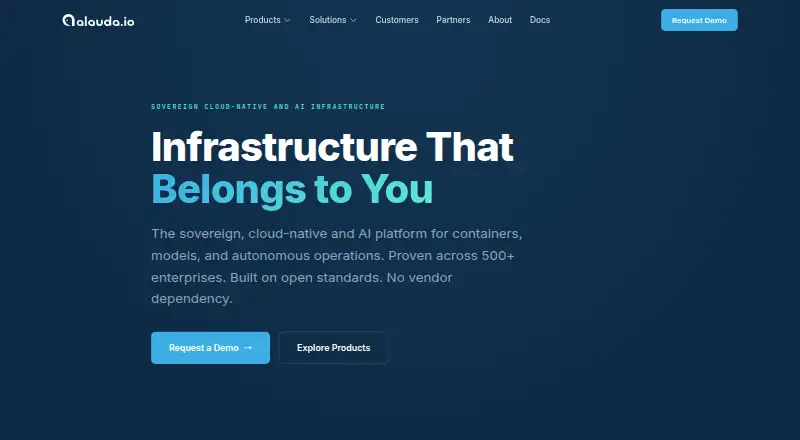
Alauda Container Platform (ACP) is an enterprise Kubernetes platform for managing infrastructure, applications, AI workloads, and virtual machines. It can run on cloud, on-premises, hybrid, multi-cloud, edge, and air-gapped environments without requiring a SaaS control plane. A central global cluster can manage ACP workload clusters and connect third-party Kubernetes environments such as OpenShift, EKS, AKS, and GKE for centralized governance. Teams can create applications from images, YAML, charts, source code, and Kubernetes workload resources, using a web console, APIs, or CLI tools. Developer features include Tekton CI/CD, Argo CD GitOps, a Backstage portal, and quota-based self-service. Lifecycle capabilities include air-gap installation and upgrades, rolling updates, backup, disaster recovery, and real-time replication. Security features include image scanning, SBOM generation, provenance verification, runtime threat detection, workload isolation, and policy governance. Some security, compliance, GitOps, and logging functions require separate extensions or products. Pricing is on request; installation packages require a Customer Portal account.
Who it suits
ACP is intended for enterprises operating cloud-native applications and Kubernetes environments. Its listed customer sectors include financial services, telecommunications, energy, government, manufacturing, retail, steel, and utilities.
What it does well
- Runs in on-premises and air-gapped environments
- Central control plane manages multiple Kubernetes environments
- Includes lifecycle tools for backup and disaster recovery
- Offers web console, APIs, and CLI access
What to know first
- Pricing is available on request
- Installation packages require a Customer Portal account
- Some security, compliance, GitOps, and logging capabilities require separate extensions or products
Limits
Pricing is on request, and there is no numeric price stated. Some security, compliance, GitOps, and logging capabilities require separate extensions or products rather than being part of default Core functionality.
Getting started
- Visit https://www.alauda.io/.
- Request pricing from Alauda.
- Create an account to access installation packages through the Customer Portal.
- Install the Core global cluster on a supported environment.
- Create workload clusters or connect existing Kubernetes environments.
- Install any additional extensions your deployment requires.
Verdict
ACP combines Kubernetes cluster management, application delivery, and lifecycle capabilities for enterprise environments. Check which separately supplied extensions are needed and request pricing to assess fit.
Questions
How is Alauda Container Platform priced?
Pricing is on request. Alauda describes ACP as having a single predictable price point, but gives no numeric price.
Where can ACP be deployed?
It can run on any cloud, on premises, and in air-gapped environments, without requiring a SaaS control plane.
Which Kubernetes environments can ACP manage?
Its unified control plane manages ACP, OpenShift, Amazon EKS, Azure AKS, and Google GKE clusters.
Does ACP include security, compliance, GitOps, and logging?
Some related capabilities require separate extensions or products and are not default Core functionality.
How do users access installation packages?
Installation packages are downloaded through the Customer Portal, and an account is required for access.
Where is Alauda based?
Alauda lists its headquarters in Singapore and says it was founded in 2014.
Facts from Alauda Container Platform's own pages
- Access
- Users and automation can access the platform through its web console, platform APIs, Kubernetes APIs, and CLI tools. · docs.alauda.io, 3 Oct 2026
- Application delivery
- Applications can be created from images, YAML, charts, source code, and Kubernetes workload resources. · docs.alauda.io, 3 Oct 2026
- Application services
- It offers Istio service mesh with mTLS, managed Redis, Kafka, MySQL and PostgreSQL, and Knative serverless workloads. · alauda.io, 2 Oct 2026
- Architecture
- The platform uses a hub-and-spoke model with a central global cluster managing workload and onboarded third-party Kubernetes clusters. · docs.alauda.io, 3 Oct 2026
- Availability
- Alauda claims 99.99% availability with active-active failover. · alauda.io, 2 Oct 2026
- Cluster management
- It can create lifecycle-managed workload clusters or onboard third-party Kubernetes environments for centralized governance. · docs.alauda.io, 3 Oct 2026
- Company
- Alauda says it was founded in 2014 and is headquartered in Singapore. · alauda.io, 3 Oct 2026
- Deployment
- It can run on any cloud, on premises, or in air-gapped environments, without a SaaS control plane requirement. · alauda.io, 2 Oct 2026
- Developer tools
- The platform includes Tekton CI/CD, Argo CD GitOps, a Backstage developer portal, and self-service with quota controls. · alauda.io, 2 Oct 2026
- Download access
- Installation packages are downloaded from the Customer Portal, and Alauda says an account is needed to access them. · docs.alauda.io, 2 Oct 2026
- Extensions
- Some capabilities, including container security, compliance, GitOps, and logging, require separate extensions or products and are not default Core functionality. · docs.alauda.io, 3 Oct 2026
- Founded
- 2014 · alauda.io, 28 Sept 2026
- Headquarters
- Singapore · alauda.io, 28 Sept 2026
- Identity and permissions
- The platform documents LDAP or OIDC identity-provider configuration and Kubernetes RBAC-based authorization. · docs.alauda.io, 3 Oct 2026
- Installation
- Core installation deploys the global cluster, after which users can create workload clusters or connect existing ones and install additional extensions. · docs.alauda.io, 3 Oct 2026
- Intended users
- Alauda describes ACP as an enterprise cloud-native platform, and its company site identifies financial services, telecommunications, energy, government, manufacturing, and retail among the sectors it serves. · alauda.io, 3 Oct 2026
- Lifecycle
- Platform lifecycle features include air-gap installation and upgrades, rolling updates, backup, disaster recovery, and real-time replication. · alauda.io, 2 Oct 2026
- Multi-cluster management
- A unified control plane manages ACP, OpenShift, EKS, AKS, and GKE clusters with centralized policy and observability. · alauda.io, 2 Oct 2026
- Pricing comparison
- Alauda describes ACP as having a single predictable price point and claims up to 50% lower total cost of ownership than OpenShift; the page gives no numeric price. · alauda.io, 2 Oct 2026
- Purpose
- Alauda Container Platform is a Kubernetes-based platform for building, deploying, operating, and governing cloud-native applications across private cloud, data center, hybrid cloud, multi-cloud, and edge environments. · docs.alauda.io, 3 Oct 2026
- Security
- Documented security capabilities include audit, network policy, API filtering, compliance features, and security product integrations. · docs.alauda.io, 3 Oct 2026
- Security support
- Alauda describes committed security fix SLAs and prioritized patching across the platform stack. · alauda.io, 2 Oct 2026
- Support
- The Customer Portal provides product downloads, a knowledge base, support tickets, an application marketplace, and license management. · docs.alauda.io, 3 Oct 2026
- Supported environments
- The documentation describes installation on traditional operating systems such as Ubuntu or RHEL and also points to installation on immutable infrastructure. · docs.alauda.io, 3 Oct 2026
Where Alauda Container Platform stands on Freedom251
- GitOps Tools#30 of 35