Freedom251 › Kubernetes Ingress Controllers

A10 Thunder Kubernetes Connector
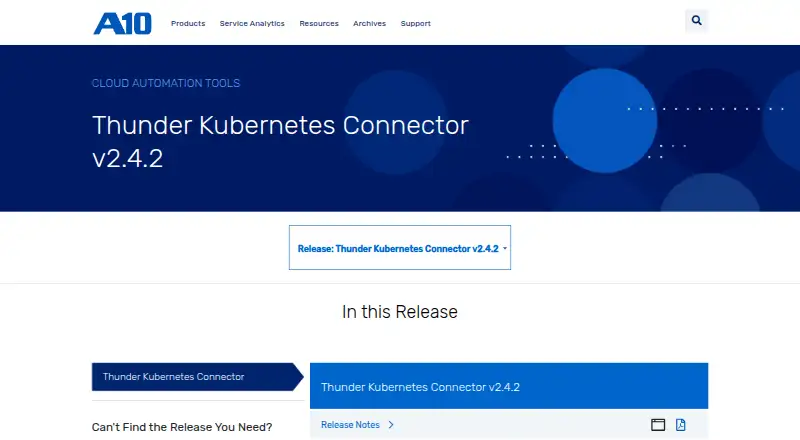
What A10 Thunder Kubernetes Connector is
A10 Thunder Kubernetes Connector (TKC) links Kubernetes application lifecycle changes to an external Thunder ADC load balancer. It runs inside a Kubernetes cluster, identifies the NodePort assigned to a web service, and dynamically configures Thunder ADC to send traffic to Kubernetes nodes. This gives applications external access without manually provisioning network resources. A10 describes TKC for multi-cloud and hybrid cloud deployments, where Thunder ADC can apply consistent security and business policies to traffic across public and private clouds. Routing through the ADC also gives operations teams a centralized view of application traffic and analytics for troubleshooting.
TKC supports automation tools such as Terraform and Ansible for CI/CD pipeline integration, and A10 lists it as an automated service discovery option for Kubernetes. Related Thunder ADC capabilities include Layer 4–7 load balancing, customizable health checks, aFleX scripting, and TLS/SSL offloading. The solution uses the ingress API model; rate limiting and a web application firewall are listed. A10’s documentation covers TKC v2.4.2. The product is Linux-based and self-hosted, and pricing is on request. A10 FlexPool is a software subscription model for distributing capacity across multiple sites.
Who it suits
TKC suits organizations running Kubernetes applications in multi-cloud or hybrid cloud environments that need an external Thunder ADC to route application traffic. It may also fit large enterprises, service providers, and cloud platforms that use Terraform or Ansible in CI/CD pipelines.
What it does well
- Dynamically configures Thunder ADC from Kubernetes service NodePorts.
- Avoids manual provisioning of network resources for external application access.
- Supports Terraform and Ansible integration into CI/CD pipelines.
- Provides centralized traffic visibility and analytics through Thunder ADC.
- Thunder ADC supports rate limiting and a web application firewall.
What to know first
- Pricing is on request.
- The deployment is Linux-based and self-hosted.
- Release notes and installation guide links redirect to an A10 sign-in page.
Limits
Pricing is on request. The v2.4.2 release notes and installation guide links redirect to an A10 sign-in page when opened.
Getting started
- Visit A10’s Thunder Kubernetes Connector documentation page.
- Review the documentation for TKC v2.4.2.
- Use the A10 sign-in page to access the linked release notes and installation guide.
- Run TKC inside a Kubernetes cluster.
- Connect TKC with Thunder ADC and, if needed, Terraform or Ansible.
Verdict
Choose TKC if you run Kubernetes applications and want lifecycle changes to configure an external Thunder ADC automatically. Its multi-cloud and hybrid-cloud policy consistency and traffic visibility are useful when those capabilities matter. Look elsewhere if you need published pricing or a deployment that is not self-hosted on Linux.
Questions
How much does Thunder Kubernetes Connector cost?
Pricing is on request; the product and documentation pages do not state a price.
What platforms does TKC support?
TKC is listed for Linux and self-hosted deployment. A10 lists Kubernetes and OpenShift among Thunder ADC’s supported cloud platforms and technologies.
What does TKC do with Kubernetes services?
It determines a web service’s assigned NodePort and dynamically configures Thunder ADC to load-balance traffic to Kubernetes nodes.
Does TKC integrate with automation tools?
A10 says TKC supports tools such as Terraform and Ansible for CI/CD pipeline integration. Thunder ADC also supports dynamic updates through TKC, HashiCorp Consul, and network infrastructure automation.
Which version is documented?
A10’s documentation page lists Thunder Kubernetes Connector v2.4.2. Its release notes and installation guide links redirect to an A10 sign-in page.
What is A10 FlexPool?
A10 describes FlexPool as a software subscription model that lets organizations allocate and distribute capacity across multiple sites.
Facts from A10 Thunder Kubernetes Connector's own pages
- Automated configuration
- TKC dynamically configures Thunder ADC to provide external access to Kubernetes applications without manual provisioning of network resources. · a10networks.com, 8 Oct 2026
- Deployment context
- The solution is described for Kubernetes applications in multi-cloud and hybrid cloud environments, with TKC running inside the Kubernetes cluster. · a10networks.com, 8 Oct 2026
- Deployment environments
- Thunder ADC is available in physical, virtual, container, bare-metal, and cloud form factors for delivering container-based applications. · a10networks.com, 8 Oct 2026
- Documentation access
- The v2.4.2 release notes and installation guide links redirect to an A10 sign-in page when opened. · documentation.a10networks.com, 8 Oct 2026
- Founded
- 2004 · documentation.a10networks.com, 28 Sept 2026
- Headquarters
- San Jose, California, United States · documentation.a10networks.com, 28 Sept 2026
- Integration
- Thunder ADC supports dynamic configuration updates through TKC, HashiCorp Consul, and network infrastructure automation. · a10networks.com, 8 Oct 2026
- Integrations
- A10 says the solution supports automation tools such as Terraform and Ansible for integration into CI/CD pipelines. · a10networks.com, 8 Oct 2026
- Intended users
- A10 describes its application and network solutions as serving large enterprises, service providers, and cloud platforms. · investors.a10networks.com, 8 Oct 2026
- Kubernetes platform support
- A10 lists Kubernetes and OpenShift among the cloud platforms and technologies supported by Thunder ADC. · a10networks.com, 8 Oct 2026
- Licensing
- The solution brief says A10 FlexPool is a software subscription model that lets organizations allocate and distribute capacity across multiple sites. · a10networks.com, 8 Oct 2026
- NodePort handling
- TKC determines the NodePort assigned to a web service and dynamically configures Thunder ADC to load-balance traffic to Kubernetes nodes. · a10networks.com, 8 Oct 2026
- Policy consistency
- Thunder ADC can apply consistent security and business policies to application traffic across public and private clouds. · a10networks.com, 8 Oct 2026
- Pricing
- The opened A10 pages do not state a price for Thunder Kubernetes Connector. · documentation.a10networks.com, 8 Oct 2026
- Pricing availability
- The opened product and documentation pages provide no TKC price; Thunder ADC directs visitors to How to Buy and Contact Sales. · a10networks.com, 8 Oct 2026
- Purpose
- Thunder Kubernetes Connector (TKC) helps provide external access to applications running in a Kubernetes cluster with Thunder ADC. · a10networks.com, 8 Oct 2026
- Related ADC features
- Thunder ADC lists Layer 4–7 load balancing, customizable health checks, aFleX scripting, and TLS/SSL offloading among its features. · a10networks.com, 8 Oct 2026
- Release
- A10’s documentation page lists Thunder Kubernetes Connector v2.4.2 and links to release notes and an installation and configuration guide. · documentation.a10networks.com, 8 Oct 2026
- Security certification
- A10 says it has achieved ISO 27001 certification covering development, servicing, and support of its network and security products. · a10networks.com, 8 Oct 2026
- Service discovery
- TKC discovers Kubernetes services and configures Thunder ADC to load-balance traffic for Kubernetes Pods as they start, stop, or move between nodes. · a10networks.com, 8 Oct 2026
- Support
- The v2.4.2 documentation page links to A10’s Support Portal, Community Network, and FAQs. · documentation.a10networks.com, 8 Oct 2026
- Visibility
- Routing external traffic through Thunder ADC provides operations teams a centralized view of application traffic and analytics for troubleshooting. · a10networks.com, 8 Oct 2026
Where A10 Thunder Kubernetes Connector stands on Freedom251
- Kubernetes Ingress Controllers#24 of 28