Some links on this page are affiliate links: if you buy through them we may earn a commission, at no extra cost to you.
The Xiaomi 15T Pro is a high-end Android phone, not merely an expensive mid-range model. Its standout features are a Leica-branded camera system with a genuine 5x telephoto lens, a large 6.83-inch 144Hz AMOLED display, flagship-class Dimensity 9400+ performance, a 5,500mAh battery, and unusually fast 90W wired and 50W wireless charging.
It is a strong buy when discounted below current flagship pricing. However, its large size, less ambitious ultra-wide and selfie cameras, customized HyperOS software, possible sustained-load throttling, and uneven regional availability matter—especially for buyers in the United States.
Verdict
The Xiaomi 15T Pro makes the most sense for buyers who want long-range camera capability, a big screen, fast charging, and abundant performance without paying the full price of a top-tier camera flagship. The 5x telephoto is its clearest advantage over many similarly priced phones.
It is less compelling when its price approaches a newer Samsung, Google Pixel, OnePlus, or Xiaomi flagship. Those alternatives may offer cleaner software, clearer update commitments, better local support, stronger ultra-wide or selfie cameras, or more consistent sustained performance.
#1 Best Overall

- International Model - No Warranty in US. USA ONLY COMPATIBLE WITH TMOBILE / MINT, TELLO GLOBAL VERSION . ****** Does NOT Work With Verizon Sprint Boost Metro Pcs At&t Cricket ***** . Unlocked Worldwide . - FCC ID: 2AFZZPNFAG
- Dual Nano sim 5G + eSIM (No micro SD support): 5G: Supports NSA + SA5G: 5G SA: 1/2/3/5/7/8/12/20/25/26/28/38/40/41/48/66/75/77/78 5G NSA: n1/3/5/7/8/20/28/38/40/41/66/75/77/78: 4G: LTE FDD: B1/2/3/4/5/7/8/12/13/17/18/19/20/25/26/28/32/66 4G: LTE TDD: B38/39/40/41/42/48: 3G: UMTS: B1/2/4/5/6/8/192G: GSM: B2/3/5/8 Supports 4x4 MIMO
- Leica Summilux optical lensVARIO-SUMMILUX 1:1.62-3.0/15-115 ASPH.Leica 23mm main camera50MPLight Fusion 900 image sensor2.4μm 4-in-1 Super Pixelf/1.62OIS23mm equivalent focal lengthLeica 115mm super telephoto camera50MPf/3.0OIS115mm equivalent focal lengthLeica 15mm ultra-wide camera12MPf/2.215mm equivalent focal lengthFOV 120° Rear camera video recording8K (7680x4320) video recording at 30fps4K (3840x2160) video recording at 30 fps, 60 fps, 120 fps1080p (1920x1080) HD video recording at 30 fps, 60 fps720p (1280x720) HD video recording at 30 fpsSlow motion video:720p 120fps, 240fps, 960fps1080p 120fps, 240fps, 960fps.
- 6.83" 144Hz eye-care displayFlat displayCorning Gorilla Glass 7iLIPO technology: Low-injection Pressure Over-moldingPeak brightness: 3200nits covering 25% display areaMaterial: AMOLEDResolution: 2772 x 1280, 447ppiRefresh rate: Up to 144Hz refresh rate*Touch sampling rate: 480Hz touch sampling rate, 2560Hz instantaneous touch sampling rate*Color gamut: DCI-P3Color depth: 68 billion colorsDC dimmingOriginal color PRO | Pro HDR | Wet touch technologyHDR10+ CertifiedTÜV The screen supports a maximum refresh rate of 144Hz. .*2560Hz instantaneous touch sampling rate needs to be activated in Game Turbo mode
- MediaTek Dimensity 9400+3nm manufacturing processCPU:1 x Cortex-X925, up to 3.73GHz3 x Cortex-X4, up to 3.3GHz4 x Cortex-A720, up to 2.4GHzGPU:Immortalis-G925 MC12 - AI:NPU 890
In short: buy the Xiaomi 15T Pro at a meaningful discount, particularly if zoom photography and charging speed matter more to you than compact design or the cleanest Android experience.
Pros and cons
- Pros: excellent 5x telephoto hardware, capable main camera, flagship-grade everyday performance, large high-refresh AMOLED display, 5,500mAh battery, 90W wired charging, 50W wireless charging, IP68 protection, and storage options up to 1TB.
- Cons: large and relatively heavy body, lower-resolution ultra-wide camera, less ambitious selfie camera, possible heat and throttling during long workloads, customized HyperOS software, no official U.S. sales channel, and value that depends heavily on the current price.
Design and build quality
The 15T Pro is built around a large 6.83-inch display and weighs approximately 210g, depending on the finish and regional configuration. Published specifications list an aluminum-alloy frame, glass front, fiber-glass rear, Gorilla Glass 7i protection, and IP68 dust and water resistance. Xiaomi also includes stereo speakers, NFC, an infrared transmitter, eSIM support, and an in-display fingerprint reader in the published hardware specification.
This is a polished, premium-feeling phone, but it is not a compact one. The size benefits video, gaming, photo editing, reading, and split-screen multitasking. It also makes one-handed use, pocketability, and prolonged use while lying down less comfortable. Buyers moving from a smaller phone should treat the dimensions as a central buying decision rather than a minor specification.
IP68 means tested resistance to dust and water under defined conditions; it does not make the phone “waterproof.” Liquid-damage exclusions can still apply to warranty claims, depending on the country.
There is no microSD expansion according to Notebookcheck’s specification collection, so choose storage carefully. Box contents, including whether a charger or case is included, vary by market.
Display: big, sharp and fast, but 144Hz is a maximum
The phone uses a 6.83-inch AMOLED panel with a 2772 × 1280 resolution, Dolby Vision, HDR10+, and a quoted peak brightness of up to 3,200 nits. That combination should make it excellent for video and outdoor viewing, although quoted peak brightness is not the same as sustained full-screen brightness in direct sunlight.
The headline feature is the maximum 144Hz refresh rate. It can make scrolling and supported games feel very smooth, but it does not mean every app runs at 144Hz. Actual behavior depends on HyperOS’s adaptive controls, the app or game, video playback, battery settings, temperature, and power-saving behavior. Users should distinguish between the panel’s maximum capability and its normal refresh rate.
Recommended Free Tools
High-frequency PWM dimming is listed in third-party specifications. Buyers sensitive to display flicker should assess the phone at low brightness rather than assuming that AMOLED behavior will be comfortable for everyone. The panel is listed as flat, which avoids the edge-touch and reflection compromises associated with curved screens.
Performance and gaming
The MediaTek Dimensity 9400+ gives the 15T Pro genuinely high-end performance. App launches, multitasking, camera processing, demanding games, and large-file operations should feel fast, and configurations go up to 12GB of RAM and 1TB of UFS 4.1 storage in published listings.
For ordinary use, the distinction between this chip and other current flagship processors is rarely important. The more relevant question is sustained performance. Secondary coverage and user reports indicate that heavy, prolonged workloads can produce significant heat and throttling. That does not make the phone slow; it means short benchmark bursts may present a more flattering picture than a long gaming session.
Serious gamers should evaluate frame-rate stability after 20 to 30 minutes, surface temperature, performance mode behavior, and battery level—not just peak benchmark scores. High brightness, 144Hz operation, 5G, charging, and demanding games can compound heat and battery drain. Game optimization and emulator compatibility can also vary because the phone uses MediaTek rather than a Snapdragon flagship platform.
What’s actually slowing this PC down?
Pick the symptom - the matching free tool is one click away.
Leica cameras
The rear camera system is the 15T Pro’s main reason to exist. It includes a 50MP Light Fusion 900 main camera with an f/1.62 aperture and optical image stabilization, a 50MP 115mm-equivalent 5x telephoto with an f/3.0 aperture and OIS, and a 12MP ultra-wide camera with a 120-degree field of view.
The Leica collaboration adds Leica Authentic and Leica Vibrant styles, filters, a Leica shutter sound, watermark options, and a master-lens system covering 23mm, 35mm, 46mm, 75mm, and 115mm perspectives. These are useful creative options, but Leica branding is not a guarantee of professional-camera equivalence or perfectly neutral color.
Main camera
The main camera has the hardware to produce detailed daylight images and strong results in challenging light. A proper evaluation should look beyond attractive outdoor samples: HDR handling, skin tones, moving subjects, indoor scenes, night highlights, foliage, flare, and consistency with the telephoto camera are more revealing.
Computational processing can produce punchy, appealing images while occasionally making night scenes look overprocessed or creating visible differences between lenses. Leica Authentic and Vibrant styles also mean that “accurate” and “pleasing” may not be the same result.
5x telephoto
The native 5x telephoto is the defining advantage. At its intended focal length it should be considerably more useful than a digital crop, especially for distant subjects, portraits, travel, architecture, and performances. Optical stabilization is valuable for both stills and video.
At 10x, the phone can combine optical and computational processing effectively in good light. At 20x and beyond, results become increasingly dependent on lighting, subject contrast, stabilization, and software sharpening. The advertised 100x mode is digital or computational zoom—not evidence of usable 100x optical image quality.
Low-light zoom deserves particular scrutiny because the phone may switch behavior or rely more heavily on the main sensor when the telephoto camera cannot gather enough light. This is one area where a camera comparison should separate native 5x images from hybrid and digital modes.
Ultra-wide, selfies and video
The 12MP ultra-wide is a clear hardware compromise relative to the main and telephoto cameras. Check edge sharpness, distortion correction, night performance, color matching, and whether its macro mode is genuinely useful. It should not be assumed to produce the same quality as the two 50MP cameras.
The front camera is listed as 32MP, but the rear system is much more ambitious. Selfie detail, dynamic range, portrait cutouts, and video quality are therefore important considerations for frequent video callers and creators.
Published specifications list rear video recording up to 8K at 30fps and 4K at up to 120fps, subject to mode and regional software limitations. Practical testing should examine 4K 60fps stabilization, focus tracking, exposure transitions, audio, HDR10+ workflow, log video and LUT support, storage consumption, and heat during extended recording. 8K is a useful specification, but it is not automatically the most practical recording mode.
DXOMARK’s camera assessment is useful as external context, but it should supplement—not replace—sample comparisons across lenses, lighting conditions, and video modes.
Battery life and charging
The 5,500mAh battery is a strong foundation for a large phone. The 15T Pro should be capable of a full day or more for many users, but actual endurance depends on brightness, refresh rate, cellular signal, camera use, navigation, gaming, and software version. Xiaomi itself notes that battery results vary with environment, software, and model.
Quick wins for a faster PC:
Repair Windows errors before they cause bigger problemsFix Now →Fix the driver behind crashes, sound loss and screen glitchesFind Drivers →Clear out junk files and repair common Windows errorsFree Scan →Rank #2
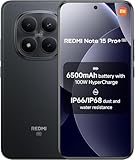
- USA MARKET ONLY WORK ON TMOBILE MINT TELLO OR ANY UNDER TMOBILE NETWORK PHONE NEEDS A SIM CARD ALREADY ACTIVATED ,OUTSIDE USA WORKS ANY GSM CARRIER SIM GSM FCC ID: 2AFZZRA8E
- Dual SIM (nano SIM + nano SIM or nano SIM + eSIM) (NoT MICRO SD SLOT) 5G: n1/2/3/5/7/8/20/28/38/40/41/48/66/77/78 / 4G: LTE FDD:1/2/3/4/5/7/8/12/13/17/18/19/20/26/28/32/66 -- 4G: LTE TDD:38/40/41/42/48 -- 3G: 1/2/4/5/6/8/19 -- 2G Quad Band - Bluetooth 5.4Wi-Fi: Wi-Fi 6/6E/Wi-Fi 5/Wi-Fi 4/802.11a/b/g Supports 2.4GHz Wi-Fi | 5GHz Wi-Fi Supports 2x2 MIMO,Wi-Fi Direct
- 6.83" CrystalRes AMOLED displayResolution: 1.5K (2772 x 1280)Refresh rate: Up to 120HzTouch sampling rate: Up to 480HzInstantaneous touch sampling rate: 2560Hz*Activated in Game Turbo modeBrightness: 3200 nits peak brightnessBrightness: HBM 1800 nitsColor depth: 12bitContrast ratio: 8000000:1DCI- P3 wide color gamut447PPICorning Gorilla Glass Victus 2Sunlight displayHDR10+ | Dolby Vision16,000-step automatic brightness adjustment3840Hz PWM dimming|TÜV Rheinland Low Blue Light (Hardware Solution) Certified | TÜV Rheinland Circadian Friendly Certified | TÜV Rheinland Flicker Free Certified
- Snapdragon 7s Gen 44nm manufacturing process technologyCPU: Octa-core processor, up to 2.7GHzGPU: Adreno GPU
- 200MP main cameraOptical Image Stabilization (OIS)0.56μm, 16in1, 2.24μmf/1.77P lens1/1.4" sensor size8MP ultra-wide cameraf/2.2Rear camera video recording4K at 30 fps1080p at 30/60 fps720p at 30 fps - 32MP front camera1/3.6" sensor sizef/2.24P lensFront camera video recording1080p at 30/60 fps720p at 30 fps
The 90W wired charging and 50W wireless charging are meaningful advantages. They reduce the inconvenience of topping up a large battery, provided the correct Xiaomi charging equipment is used. Xiaomi recommends a Xiaomi 90W adapter or above for the advertised wired performance, while compatible wireless hardware may be sold separately.
Maximum charging speeds are not constant from zero to full. Charging slows as the battery approaches 100%, and heat, battery temperature, battery-protection settings, regional packaging, and the cable or adapter can reduce the rate. A generic USB-C charger may charge the phone safely but may not deliver Xiaomi’s maximum speed. Similarly, a generic Qi pad should not be expected to reach 50W.
For long-term ownership, battery-protection features and slower overnight charging can be preferable to using maximum speed for every top-up. The trade-off is convenience versus heat and battery wear.
Independent reader supportYour contribution helps us test, update, and keep practical guides available for everyone.HyperOS and long-term ownership
The phone launched with Android 15 and HyperOS 2.0. Notebookcheck later documented a review unit running Android 16 with HyperOS 3.0, but software availability and rollout timing vary by region. Xiaomi announced HyperOS 3 distribution beginning in late October 2025 for select regions.
Windows Errors? Fix Them Before They Spread
Repair common Windows errors and clear accumulated junk for a smoother, more stable PC - no reinstall needed.Free scan · no reinstallCrashes, No Sound, or Screen Glitches?
Random freezes, missing sound and display glitches usually trace back to one bad driver. Find and replace yours safely.Free scan · under a minuteHyperOS is feature-rich and integrates Xiaomi’s ecosystem, camera tools, customization, battery controls, and device utilities. It is also more heavily customized than Pixel software and can feel less restrained than OnePlus’s OxygenOS. Buyers should check for preinstalled applications, recommendation prompts, promotional notifications, app-store messages, and background-management controls.
Notification reliability can depend on Xiaomi’s battery restrictions. If an app is late or silent, review its battery setting, autostart permission, background activity, and notification permissions rather than assuming the hardware is defective. Menu names can change with HyperOS updates.
AI features and Xiaomi Offline Communication are not universal guarantees: availability can depend on country, language, account, software version, Gallery Editor version, and an internet connection. Do not assume an advertised feature will be available on every regional model.
Specific claims about Android-version upgrades or security-support duration should be checked against Xiaomi’s official policy for the exact market. Community claims about support periods should not be treated as a substitute for regional documentation.
Do these 3 things before closing this tab:
1Clear out junk files and repair common Windows errors2Scan for outdated or missing drivers - takes under a minute3Repair Windows errors before they cause bigger problemsConnectivity and the U.S. import problem
Published specifications list 5G, Wi-Fi 7, Bluetooth 6.0, NFC, USB-C, eSIM, dual-SIM support, and an infrared transmitter. Regional configurations can differ, so the model number matters.
The United States requires special caution. Xiaomi does not officially sell the 15T Pro through a U.S. channel. An imported handset may have incomplete support for a carrier’s bands, VoLTE, Wi-Fi calling, 5G, eSIM, or emergency services. Warranty, repairs, replacement parts, charger type, firmware region, return rights, Google Wallet, Android Auto, and banking-app compatibility also need verification.
Do not rely on a seller’s statement that the phone “works in the U.S.” Check the exact model number against the buyer’s carrier, confirm VoLTE and Wi-Fi calling, establish the firmware region, and buy only with a credible return policy. TechRadar’s review also highlights the model’s international availability limitations.
Everyday hardware
Stereo speakers, an optical in-display fingerprint reader, NFC, Bluetooth audio support, and the infrared blaster make the phone versatile. A review should still check speaker balance, maximum-volume distortion, haptic quality, call clarity, microphone performance, USB-C transfer behavior, fingerprint reliability, and face-unlock limitations. Face unlock should not be treated as equivalent to a secure hardware-backed fingerprint authentication method.
The Tool Desk
Outbyte PC Repair FREERepair Windows errors before they cause bigger problemsFix Now →Outbyte Driver Updater FREEScan for outdated or missing drivers - takes under a minuteDriver Scan →How it compares with alternatives
Xiaomi 15
The Xiaomi 15 is the more logical choice for buyers who want a smaller flagship-style phone. The 15T Pro is better suited to users who prefer a large display, larger battery, fast charging, and a 5x telephoto emphasis.
Xiaomi 15 Ultra
The 15 Ultra is the more serious photography option and may justify its higher cost for buyers who prioritize the most elaborate camera hardware. The 15T Pro is the value choice when its price is substantially lower and the 5x lens covers the buyer’s needs.
Google Pixel
A Pixel is generally the safer choice for cleaner Android software, Google integration, computational photography, and U.S. availability. Xiaomi counters with faster charging, aggressive hardware specifications, a large display, and a stronger value proposition for telephoto hardware.
Samsung Galaxy
A comparable Galaxy model can offer easier carrier compatibility, local warranty and repairs, ecosystem integration, and more predictable support. The Xiaomi may offer more charging speed and hardware per dollar, depending on the country and current sale price.
Free tools Windows power users keep installed
One-click scans. No signup required.
OnePlus
OnePlus is a natural alternative for buyers who want high performance, fast charging, and a generally less intrusive interface. The Xiaomi’s differentiator is the Leica camera system and native 5x telephoto rather than software simplicity.
Older and newer Xiaomi T-series phones
A discounted previous-generation flagship may offer better software maturity, local support, or more consistent secondary cameras. Conversely, a newer 2026 Xiaomi T-series model may be preferable if its price is close and it brings a longer remaining support window. Compare current street prices and storage tiers rather than launch prices alone.
Price-sensitive buying advice
Pricing is country- and configuration-specific. Reported figures range from approximately €799.99 to €899.90 in European coverage and around £649 in some listings, reflecting differences in storage, launch promotions, and market. Xiaomi’s official store for the buyer’s country is the source of truth. There was no official U.S. MSRP identified in the supplied sources.
| Price position | Recommendation |
|---|---|
| Deeply discounted | Strong buy for camera, charging, display, and performance enthusiasts. |
| Normal discounted retail | Buy if native 5x zoom and battery capacity matter most. |
| Near current flagship pricing | Compare carefully with Xiaomi, Pixel, Galaxy, and OnePlus flagships. |
| Imported with weak warranty | Buy only after verifying bands, firmware, carrier features, charger, and returns. |
The right question is not whether the 15T Pro is cheap in isolation. It is whether its current local price leaves enough room to justify compromises in software polish, sustained thermals, camera consistency, support, and ergonomics.
What’s actually slowing this PC down?
Pick the symptom - the matching free tool is one click away.
Final recommendation
Choose the Xiaomi 15T Pro if you want a large high-refresh display, a useful native 5x telephoto camera, strong everyday speed, a large battery, and rapid wired and wireless charging—and you can buy an official local version at a clear discount.
Choose something else if you want a compact phone, the cleanest Android software, the strongest selfie or ultra-wide cameras, guaranteed U.S. carrier support, maximum sustained gaming performance, or a clearly documented long-term update policy.
The Xiaomi 15T Pro is a compelling flagship-value phone, but its recommendation is price-sensitive. The closer it gets to a current flagship’s price, the harder it becomes to overlook its regional support, HyperOS, size, thermal, and secondary-camera compromises.
Quick Recap
Product prices and availability are accurate as of the date/time indicated and are subject to change. Any price and availability information displayed on Amazon at the time of purchase will apply.

