Recommended Free Tools
Some links on this page are affiliate links: if you buy through them we may earn a commission, at no extra cost to you.
Researchers have created the first reported two-dimensional mechanically interlocked polymer—a chainmail-like molecular material that could eventually help make tougher protective composites. The Northwestern-led team reported a small-scale composite improvement using just 2.5% of the polymer, but the work has not shown that a vest, helmet or armor plate can stop a bullet.
The study, published in Science on January 17, 2025, is a significant materials-design advance. Its promise is a new way to build toughness into polymers, not a ready-made replacement for Kevlar or other established armor.
What makes this polymer “mechanically interlocked”?
Conventional polymers are made from long molecular chains held together by chemical bonds. In a mechanically interlocked molecule, components are connected by their topology: for example, rings can be threaded through one another without being joined solely by a direct covalent bond. The parts remain linked while retaining some freedom to move.
PC Slower Than It Used to Be?
A free scan shows the junk files, broken settings and background clutter dragging Windows down - then fixes them in one click.Free scan · Windows 10 & 11Outdated Drivers Are Slowing You Down
One free scan finds every outdated or missing driver and matches the right update for your exact hardware.Free scan · exact hardware matchMechanically interlocked molecules and molecular machines have a longer history; the novelty here is the combination of a polymeric material, a two-dimensional sheet-like architecture, dense mechanical interlocking and a method that produced a substantially larger quantity than earlier demonstrations. The researchers describe it as the first reported two-dimensional mechanically interlocked polymer, not the first mechanically interlocked polymer or molecule of any kind. The original study appeared in Science.
#1 Best Overall

- HIGH QUALITY: The weight vest composed of 1000D fabric, high-tensile strength thread, and webbing is equipped with a map pouch and three modular heavy-duty mag panels.It comes with two stable side straps as well as adjustable padded shoulder straps. The weight vests are fully padded with breathable 3D mesh, which are comfortable and keep you cool by allowing air circulation.
- FUNCTIONAL-RAPID OPEN:This weight vest is built with rapid-open connectors on the shoulders and waist that make it easy to quickly put it on and take it off. The unique cummerbund features integrated pockets that can even be accessed through the side for added protection in case it's required. The ideal training tool for combat training, field work, hiking, camping, extreme challenges, and fans alike.
- MOLLE SYSTEM: Throughout the weight vest, there are MOLLE webbing attachment points and optional personalization options. Map pockets with snap-and-hook closures keep important documents within reach, and pockets offer easy access to soft pocket as needed. Shock-cords and cord locks can be hidden in the back of the vest, not only can the waist and size be adjusted, it can also enhance the feeling of comfort.
- PERFECT SIZE: Adjustable shoulder strap and cummerbund fit most people from size L to XXXXL size: maximum waist 52 inches, minimum waist 36 inches. Retro kit integrates seamlessly with carriers that use hook-and-loop flap systems to fit different waist sizes. In addition, waist belts and shoulder straps can also achieve the effect you want.
- QUALITY ASSURANCE: This vest is a very nice gift. We provide a one-year warranty. If you encountered any quality issues regarding this weight vest, please contact us immediately and we will make every effort to resolve your issue until you are satisfied.
“Chainmail” is a useful image for the interlocking, but it is only an analogy. This is not miniature metal armor, and a molecular structure that can move under load does not automatically behave well against bullets, fragments, heat, moisture or repeated impacts.
How the researchers made it
The Northwestern-led team, working with collaborators at Cornell and Duke, used a crystal to organize the ingredients before they reacted:
- X-shaped monomers were arranged into an ordered molecular crystal.
- The crystal was reacted with another molecule while holding the components in the geometry needed for interlocking.
- The reaction created mechanical bonds within the organized structure, producing layers of interlocked two-dimensional polymer sheets.
That template matters: arranging the molecules first helps put them in positions where mechanical bonds can form. Cornell collaborators used advanced electron microscopy to examine the material at nanoscale resolution. The imaging supported the intended crystalline, interlocked structure; it is evidence about architecture, not evidence of ballistic protection. The National Science Foundation summarizes the structural imaging and research.
Why the architecture could matter mechanically
When a conventional material is pulled or struck, a crack can concentrate stress and grow. The researchers’ design aims to let interlocked components move within limits, distributing force across the structure and making tearing harder. As the available movement is used up, the material may resist further deformation more strongly. William Dichtel has described this as an initial “give” followed by greater resistance.
Rank #2

- 【VERSATILE USE】 Fits men’s sizes S–XL, designed specifically for airsoft, paintball, cosplay, and outdoor training.
- 【MODULAR SETUP】 Full MOLLE webbing coverage on front and back lets you attach extra gear effortlessly. Hook-and-loop panels offer space for name tags, morale patches, and customization.
- 【ADJUSTABLE FIT】Waist adjusts easily from 31" to 49" (80–125 cm) via hook-and-loop shoulder and waist straps. Enjoy a personalized, snug fit that adapts to your body type.
- 【COMFORTABLE WEAR】Thick composite lining enhances comfort and breathability, reducing pressure even during extended activities. Stay comfortable for hours on end.
- 【DURABLE & LIGHTWEIGHT】Crafted from heavy-duty 600D Oxford fabric, it boasts high tensile strength and superior wear resistance. Lightweight construction ensures maximum mobility.
That is a plausible route to combining flexibility with toughness, and it helps explain the interest in impact protection. But the mechanism is a materials-design rationale, not a demonstrated bullet-stopping effect. A material can be strong yet brittle, or tough in a slow laboratory test yet perform differently under the very high strain rates of a ballistic impact.
What the study actually reported
- Bond density: approximately 100 trillion mechanical bonds per square centimeter, a reported structural-density figure—not a measure of strength by itself.
- Quantity: about half a kilogram of polymer, a meaningful increase over earlier mechanically interlocked materials made only in very small quantities.
- Processing observation: the bulk material could be dissolved in solvent while individual interlocked sheets remained. This may offer processing options, but does not establish that manufacturing is easy, cheap or environmentally benign.
- Composite demonstration: a formulation containing 97.5% Ultem fiber and 2.5% of the new polymer reportedly showed increased strength and toughness.
The reported Ultem result is important because it tests the material as a small additive to an existing high-performance polymer-fiber platform, rather than claiming that the new polymer alone is an armor fabric. The work suggests possible roles as a reinforcement, coating, binder, matrix modifier or processing additive. The available institutional and defense coverage does not provide the underlying quantitative measurements needed for a responsible numerical comparison of tensile strength, toughness, weight or energy absorption.
Nor does an improved fiber composite automatically translate into better armor. Performance depends on how the material is processed and arranged, how much it weighs per unit area, and how the complete panel handles impact and trauma.
What it could mean for ballistic protection
If the interlocked structure can be manufactured consistently and retain its useful properties in composites, it could be explored in flexible panels, laminates, coatings, interlayers or backings behind a ceramic strike face. A tougher component might help limit tearing, crack growth or delamination and redistribute impact loads. Hybrid designs could combine it with aramid fibers, ultra-high-molecular-weight polyethylene (UHMWPE), ceramics or other materials.
Rank #3
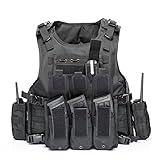
- ADJUSTABLE & FIT ADULT,S-XXL: maximum chest size is 50 inches.(125cm) be adjusted to fit max be adjusted to fit shoulder and waist size,please note this important size information before place an order.
- DURABLE & COMFORTABLE:Well made of 900D high density nylon,well constructed, with a thick pvc lined nylon,strong tensile wear-resisting ability.
- MULTIPLE DUTY & FLEXIBLE REMOVABLE:Carry 3 standard magazine pouches ,1 map and flashlight pouch, 2 communication pouches and 1 medic pouch,all bags are removable.
- MOLLE & VELCRO:Modular Lightweight Load-carrying System,powerful suspension belt,strengthen tactical load-bearing,designed magic VELCRO.
- USE SCENES: Target for tactical training, shooting,airsoft & paintball and CS game.
Those are research directions, not proven product advantages. Ballistic protection is a system property. Projectile type and speed, impact angle, panel construction, backing, hit spacing, seams, back-face deformation, environmental conditioning and manufacturing consistency all matter. One promising ingredient cannot establish whether a finished vest or plate protects against a specified threat.
What has not been demonstrated
The available reports do not establish that a finished armor system made with this polymer has:
- stopped a specified bullet or fragment in a published ballistic test;
- met a military, law-enforcement or occupational-protection standard;
- reduced back-face deformation or blunt-trauma risk to a defined limit;
- passed multi-hit, environmental-aging or field trials; or
- entered commercial production as an armor product or purchasable additive.
In 2025, AFCEA described the program as basic research and reported that the researchers were seeking additional funding. The polymer should therefore be treated as an early-stage research platform, not a commercially available substitute for Kevlar, UHMWPE or ceramic armor. AFCEA’s account discusses the early research stage and possible applications.
Quick wins for a faster PC:
Fix the driver behind crashes, sound loss and screen glitchesFind Drivers →Clear out junk files and repair common Windows errorsFree Scan →What would need to happen next
Before an armor claim is credible, the material would need to move through several levels of testing. First, researchers would need repeatable material-level results: tensile, tear, compression, shear, puncture, crack-propagation, fatigue and high-strain-rate behavior, along with heat, humidity, UV, chemical, flammability and aging data.
Rank #4
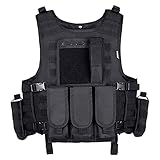
- 【VERSATILITY】Fits M-XXL for men. A versatile tactical vest for airsoft & paintball & cosplay game etc.
- 【MODULAR CUSTOMIZATION】The exterior of the vest is covered in MOLLE for modular customization, with hoop&loop on the front map pouch and back molle webbings, available for identifier and patches.
- 【ADJUSTABLE SIZE】Fully adjustable in girth and height. Adjustable in waist size from 37 in - 51 in (95cm - 130cm). Please note this important size information before placing an order.
- 【MOLLE POUCHES】 1 triple rifle magazine pouch, 1 map and flashlight pouch, 2 communication pouches and 1 tool pouch. All of accessories can be disassembled and reorganized.
- 【HIGH QUALITY】Made of 900D high density nylon, well constructed, strong tensile wear-resisting ability. 100% money back or replacement guarantee if you have any dissatisfaction with your item in 30 days.
Next comes composite validation. The interlocked structure would need to survive the actual processing used for fibers, films, coatings or laminates. Researchers would need to measure adhesion, delamination, multi-hit behavior, fold durability and performance at comparable areal density. Solvent processing, if used, would also need assessment for recovery, worker safety, environmental impact and cost.
Finally, a finished system must be tested against defined projectiles and velocities, with specified impact angles, hit spacing and environmental conditioning. Back-face deformation and repeatability across samples and manufacturing lots matter, as does independent verification against the relevant specification. Certification belongs to the finished protective system—not to a molecular structure or a single favorable composite measurement.
How it compares with established armor materials
| Material or system | Typical role | Established strength | Trade-off or caveat |
|---|---|---|---|
| Aramid fibers, including Kevlar | Flexible ballistic fabrics and soft armor | Mature, widely used, heat-resistant fiber systems | Performance depends on construction and care; moisture, UV, compression and aging can matter. |
| UHMWPE fibers, such as Dyneema | Lightweight soft armor and plate backers | Low density and high specific strength | Temperature and processing limits matter; often used in hybrid systems. |
| Ceramic composites | Hard armor strike faces | Can address higher-energy threats when appropriately designed | Brittle, generally heavier than soft armor, and subject to handling and multi-hit trade-offs. |
| Mechanically interlocked polymer | Potential future reinforcement or composite component | May offer a new route to flexibility, toughness and processability | No demonstrated fielded armor, certification, industrial supply chain or long-term reliability in the available reports. |
These categories cannot be ranked by a single strength number. A fair comparison requires the same threat, test method, environmental conditioning and areal density. Comfort also depends on garment construction, ventilation, weight distribution and trauma attenuation—not just flexibility in a material sample.
From a half-kilogram batch to a protective product
Producing about half a kilogram is a useful scale-up milestone, but it is not industrialization. The next steps would include reproducing the synthesis, making larger consistent batches, converting the material into usable fibers or films, and confirming that processing preserves the interlocked architecture and its reported benefits. Manufacturers would then need reliable quality control, supply, cost and safety practices before qualifying a finished armor design.
The 2.5% Ultem result points toward a potentially practical path: improve an existing composite with a small amount of a new component rather than replace every part of an armor system. Whether that path works at production scale—and whether it improves protection at equal weight and against relevant threats—remains to be established.
Quick Recap
Product prices and availability are accurate as of the date/time indicated and are subject to change. Any price and availability information displayed on Amazon at the time of purchase will apply.

