Some links on this page are affiliate links: if you buy through them we may earn a commission, at no extra cost to you.
There was never an official Apple iCar. The name belonged to a decade-long rumor cycle surrounding Project Titan, Apple’s reported electric- and autonomous-vehicle program. Apple explored the project from around 2014 until it was reportedly wound down on February 27, 2024. As of August 16, 2026, Apple has announced no production car, final vehicle specifications, retail price, or Project Titan revival.
The real story is not that Apple missed a launch date. It is that the company struggled to define a product compelling enough to justify the enormous technical, manufacturing, regulatory, and strategic demands of entering the automobile business.
The car that became a product before it existed
“Apple Car” and “iCar” were public labels, not names Apple officially announced. Contemporary reporting associated the internal effort with the codename Project Titan, but Apple never unveiled a vehicle or confirmed that it was building one.
Quick wins for a faster PC:
Fix the driver behind crashes, sound loss and screen glitchesFind Drivers →Repair Windows errors before they cause bigger problemsFix Now →Scan for outdated or missing drivers - takes under a minuteDriver Scan →That distinction matters. Most of the supposed details—autonomy targets, battery technology, launch dates, manufacturing plans, vehicle designs, and prices—came from reports citing anonymous sources. They described changing internal ambitions, not a finalized Apple product.
#1 Best Overall

- PREVENT BATTERY FAILURE: Ensure reliable starts after storage with this 4-in-1 device that charges, maintains, tests, and restores batteries for cars, motorcycles, ATVs, trucks, SUVs, and boats.
- REVIVE DEAD BATTERIES: Delivers 15A rapid charging power to keep standard, AGM, gel, and deep-cycle batteries healthy, making it the perfect garage upgrade for seasonal or infrequently used vehicles.
- EASY OPERATION: Microprocessor controlled with auto voltage detection and smart trickle charging technology for a seamless charging experience.
- MULTI-FUNCTION VALUE: Maximize battery life and performance with advanced desulfation mode, automatic voltage detection for 6V and 12V batteries, and multi-stage charging algorithms.
- COMPLETE PACKAGE: Includes (1) SC1280 Battery Charger and Maintainer, (1) user manual
Project Titan reportedly began around 2014, during a period when Silicon Valley viewed electric vehicles and self-driving technology as the next major computing platform. On February 27, 2024, reports said Apple was ending the car effort and moving some employees into generative-AI work. Apple did not publish a detailed explanation or technical postmortem.
Why Apple wanted a car
A vehicle offered Apple a possible hardware platform beyond the iPhone, iPad, and Mac. An Apple-designed car could have extended the company’s ecosystem into navigation, payments, voice assistance, media, health, connected services, and transportation.
The opportunity was also about control. Apple’s traditional advantage comes from combining hardware, software, silicon, services, and a tightly managed user experience. A vehicle could have given Apple similar control over the cabin, displays, sensors, operating system, and relationship with the driver.
What’s actually slowing this PC down?
Pick the symptom - the matching free tool is one click away.
Those were strategic possibilities inferred from reporting and the industry context, not a business plan Apple publicly confirmed. Still, they explain why the project seemed plausible—and why expectations became so high even without an announcement.
The original dream: an electric, software-defined vehicle
Reports described several versions of the concept over the years. At different points, Apple was said to be considering:
- An all-electric passenger vehicle.
- A premium interior designed around software and displays.
- Deep integration with Apple services, voice-guided navigation, and machine learning.
- Advanced autonomous-driving capabilities.
- At the most ambitious stage, a vehicle that might not need conventional steering controls or pedals.
These should not be combined into one definitive specification. They belonged to different phases of a project that repeatedly changed direction. The no-steering-wheel concept was particularly memorable, but it was not necessarily the final ambition. Later reporting described a much more conventional electric vehicle with limited driver assistance.
Project Titan’s first major pivot
Building a complete car proved very different from designing a consumer electronic device. Around 2016 and 2017, the project reportedly underwent a major restructuring and shifted emphasis toward autonomous-driving systems.
Rank #2

- UNLEASH PEAK POWER: A 50-amp engine start and 10-amp boost charge bring dead batteries back to life fast, so your daily driver, truck, or weekend ride fires up the second you need it.
- PREVENT BATTERY FAILURE: Ensure reliable starts after storage with this 3-in-1 device that starts, charges, and maintains batteries for cars, motorcycles, ATVs, trucks, SUVs, and boats.
- SMART TRICKLE CHARGE: A microprocessor-controlled 2A to 6A charge paired with a smart trickle charge that automatically maintains voltage over time lets you leave the charger connected without worry.
- SAFE AND RELIABLE: Engineered with reverse hook-up protection, the charger won't operate if clamps are reversed, preventing damage to your battery and car.
- COMPLETE PACKAGE: Includes (1) SC1361 6A Battery Charger and Maintainer, (1) User Manual
That was the first important warning sign. Apple appeared to be reconsidering whether it should manufacture an entire vehicle or develop the technology that would make vehicles autonomous. Reports also described possible partnerships, including an autonomous shuttle arrangement involving Volkswagen.
The shift made strategic sense: software and autonomous systems were closer to Apple’s existing strengths and avoided some manufacturing problems. But it also created a new question—if Apple did not build the vehicle, what exactly would distinguish the product from automotive suppliers, automakers, and competing autonomy companies?
A revolving door of leaders and ideas
Project Titan repeatedly brought in automotive and autonomy specialists while its scope continued to move.
- Bob Mansfield reportedly took over during an earlier restructuring.
- Doug Field, a former Tesla executive, later led the project before leaving Apple for Ford.
- Ulrich Kranz, formerly associated with Canoo and BMW’s i3 program, joined the effort.
- Kevin Lynch, an Apple software executive, later became a project leader.
- CJ Moore, formerly associated with Tesla’s Autopilot organization, was also reported to have joined.
This was not simply a personnel story. The leadership changes reflected the underlying dilemma: Apple needed automotive manufacturing expertise, autonomous-driving expertise, software leadership, and an executive who could turn those pieces into one viable product.
Free tools Windows power users keep installed
One-click scans. No signup required.
As TechCrunch’s timeline shows, the project repeatedly imported expertise without settling the fundamental question of what Apple should actually sell.
A decade of reported launch dates
| Period | Reported development | Why it mattered |
|---|---|---|
| 2014 | Apple reportedly begins automotive work. | The project starts during peak optimism about electric and autonomous vehicles. |
| 2015 | Project Titan becomes widely associated with Apple’s automotive effort. | Public expectations rise despite Apple’s silence. |
| 2016–2017 | The program reportedly restructures and emphasizes autonomous systems. | Apple appears to be struggling with the complexity of building a complete car. |
| 2018 | Apple reportedly explores an autonomous shuttle arrangement involving Volkswagen. | Partnership becomes an alternative to going entirely alone. |
| 2020 | Reuters reports a possible 2024–2025 vehicle window. | The rumor cycle becomes attached to specific dates. |
| 2021 | Apple reportedly adds automotive leadership and explores battery and manufacturing options. | The project appears active but strategically unsettled. |
| 2022 | Reports describe a less ambitious vehicle targeted around 2026, with a planned price below $100,000. | Full autonomy is reportedly deferred. |
| January 2024 | The target reportedly moves to 2028 or later, with autonomy reduced further. | The original transformative vision has been substantially weakened. |
| February 27, 2024 | Apple reportedly cancels or winds down the vehicle effort. | The iCar story ends as a product story. |
| May 15, 2025 | CarPlay Ultra begins rolling out with Aston Martin. | Apple’s automotive strategy becomes more clearly software-led. |
Every date in this table was a reported target or estimate, not an Apple promise. The progression from 2024 or 2025 to 2026 and then 2028 illustrates how difficult it was to turn the project into a production plan.
Why building a car was so different from building an iPhone
Manufacturing and safety
A road vehicle requires crash-tested structures, regulatory certification, qualified suppliers, large-scale production, warranty systems, recalls, repair networks, replacement parts, and long-term liability management. Apple has deep supply-chain expertise, but a car is not simply a larger consumer electronic device.
Rank #3

- UNLEASH PEAK POWER: Delivers a massive 250-amp engine start to instantly revive dead batteries, cars, trucks, SUVs, RVs, and high-performance rides are operational when you need them.
- MORE CONTROL OVER CHARGING: Take command with a 135-minute timer for precision manual control, allowing users to customize the charging process for specific battery needs.
- REDUCE DOWNTIME WITH FAST CHARGING: Quickly bring deeply discharged batteries back to life with powerful 25-amp and 50-amp boost charges, reducing downtime and keeping all your vehicles—from daily drivers to classic cars to ATVs—running smoothly.
- UNMATCHED VERSATILITY: Handle virtually every job with one device that supports 6V and 12V standard, AGM, gel, and deep-cycle batteries across automotive, marine, and power sport vehicles.
- COMPLETE PACKAGE: Includes (1) SC1445 Manual Timer-Controlled Wheeled Battery Charger and Engine Starter, (1) User Manual
Apple would also have had to decide whether to build factories, rely on an established automaker, or create a hybrid arrangement. Going alone would provide greater control over the experience but expose Apple to more capital and operational risk. Partnering could reduce manufacturing risk while limiting Apple’s control and differentiation.
Do these 3 things before closing this tab:
1Repair Windows errors before they cause bigger problems2Fix the driver behind crashes, sound loss and screen glitches3Clear out junk files and repair common Windows errorsAutonomy
Full self-driving promised the strongest differentiation but was technically, legally, and commercially much harder. A limited driver-assistance system was more achievable, yet it required continuous driver attention and offered less reason to buy an Apple-branded vehicle.
Bloomberg reported in January 2024 that Apple’s target had moved to 2028 at the earliest and that the autonomy ambition had been reduced to a system broadly comparable to Level 2. That would have been a major change from the vision of a vehicle that could operate without conventional controls.
Battery technology
Apple reportedly explored battery concepts and discussed sourcing with suppliers. However, Apple never officially disclosed a production battery design, chemistry, range, charging speed, or capacity. Supplier conversations and reported engineering ideas should not be treated as confirmed specifications.
Product definition
The project reportedly moved among several possibilities:
Outdated Drivers Are Slowing You Down
One free scan finds every outdated or missing driver and matches the right update for your exact hardware.Free scan · exact hardware matchWindows Errors? Fix Them Before They Spread
Repair common Windows errors and clear accumulated junk for a smoother, more stable PC - no reinstall needed.Free scan · no reinstall- An Apple-built consumer electric car.
- A self-driving technology platform.
- A vehicle developed with an established automaker.
- A fleet or ride-hailing product.
- A premium EV positioned against Tesla.
- A vehicle primarily intended to showcase Apple software.
This lack of a stable definition may have been the central problem. Each option implied a different business model, team, partner structure, cost base, regulatory burden, and customer proposition.
The impossible compromise
Project Titan faced a difficult trade-off. Full autonomy could have justified Apple’s enormous investment by creating a genuinely new product category. But it was the hardest technical and regulatory path.
Rank #4
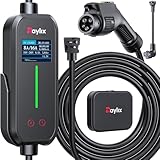
- [2026 INTELLIGENT CHARGING UPGRADE — PRECISION CONTROL MEETS SMART SCHEDULING] After surveying 100K+ U.S. EV owners, the Raylix R&D team found that nearly all drivers recognized the necessity of adjustable current and scheduled charging. Our upgraded J1772 charger features 4-level adjustable current (8A/10A/12A/16A) and a 1–12 hour smart delay timer. Whether you're charging overnight or during off-peak hours, enjoy smarter energy use, lower costs, and total convenience—on your schedule.
- [ONE CHARGER, ALL J1772 EVs/PHEVs READY!] Compatible with all SAE J1772 electric vehicles and plug-in hybrids—whether it’s Ford, GM, Nissan, Audi, BMW, Kia, Hyundai, Honda, Chevy, or more. Perfect for home or on-the-road charging, our 16A Level 1 & 2 charger ensures your EV is always powered and ready for any journey.
- [CHARGE 4× FASTER — NO MORE WAITING] In a rush? Our 16A Level 1 & 2 charger delivers charging speeds up to 4× faster than standard 8A Charger Level 1. Whether it's an early commute, a spontaneous trip, or last-minute errands, your EV will be ready when you are.
- [LEVEL 1 & 2 PORTABLE CHARGER — CHARGE ANYWHERE, ANYTIME] Designed for maximum flexibility, Raylix Level 1 & 2 EV charger features both 5-15 and 6-20 plug compatibility. Whether you're charging in your garage, at a friend's house, or at a roadside motel. NEMA 6-20 plug for Level 2 ev charging (240V, 16A, 3.68kW, 9-12 miles/hr) and a NEMA 5-15 adapter for Level 1 ev charging (120V, 12A, 1.44kW, 3-5 miles/hr) NOTE: In compliance with North American electrical safety standards, the charger automatically limits current to 12A when using a 5-15 outlet—protecting both your vehicle and your home’s electrical system.
- [AT-A-GLANCE CHARGING COMMAND: TOTAL CONTROL, INSTANTLY] While most ev chargers solutions confine vital data to in-car screens, the Raylix tesla charger breaks free with its enhanced TFT color display. This Raylix-exclusive feature delivers crystal-clear, real-time updates—voltage, current, power load, AND critical charging temperature—directly on the unit. Just one glance gives you complete charging insight. It’s not just information; it's the empowering peace of mind and satisfying control that transforms every charge into a masterfully managed experience.
A conventional electric vehicle would have been easier to explain and potentially easier to certify, but it would have entered a competitive market with established automakers and EV specialists. If Apple removed the radical autonomy proposition, it also weakened the reason for the vehicle to exist.
Premium positioning offered another compromise. A high-priced car could fit Apple’s brand and protect margins, but it would limit volume and make it harder to build a broad transportation ecosystem. A cheaper mass-market car would increase the manufacturing, support, and service requirements.
What Apple reportedly canceled
On February 27, 2024, TechCrunch and other outlets reported that Apple was ending Project Titan. Some employees were reportedly directed toward generative-AI work. Hardware engineers and vehicle designers were said to be applying for other internal roles, while some workers faced possible layoffs. Reports also described a period in which some employees could seek new positions inside Apple.
The exact final headcount and personnel outcomes were not publicly itemized by Apple. Reports varied on the project’s size, with estimates ranging from roughly 1,400 people to nearly 2,000. Those numbers should be understood as attributed estimates, not an official Apple figure.
Apple did not publish a formal reason for the cancellation. The most defensible explanation is cumulative:
- The product vision kept changing.
- Autonomy proved less predictable than early industry forecasts suggested.
- Manufacturing and servicing a complete vehicle required a new operational infrastructure.
- Launch targets continued to move.
- A scaled-back driver-assistance EV would have had less distinctive value.
- Generative AI became a competing strategic priority.
It is therefore too simple to say Apple canceled the project because it could not build a car. The deeper problem was finding an automotive product that was achievable, differentiated, strategically timed, and worth the opportunity cost inside Apple.
Recommended Free Tools
What survived: CarPlay Ultra
Apple did not abandon the automobile as a software and interface battleground. On May 15, 2025, Apple announced that CarPlay Ultra had begun rolling out in Aston Martin vehicles in the United States and Canada.
Best Value

- PREVENT BATTERY FAILURE: Ensure reliable starts after storage with this 3-in-1 device that charges, maintains, and reconditions batteries for cars, motorcycles, ATVs, trucks, SUVs, and boats.
- MULTI-FUNCTION VALUE: Maximize battery life and performance with advanced desulfation mode, automatic voltage detection for 6V and 12V batteries, smart trickle charging , and multi-stage charging algorithms.
- REVIVE DEAD BATTERIES: Delivers 1.5A immediate charging power to keep standard, AGM, and deep-cycle batteries healthy, making it the perfect garage upgrade for seasonal or infrequently used vehicles.
- EASY OPERATION: Experience peace of mind with smart trickle charging that safely maintains battery health over time without overcharging, plus reverse hook-up protection for safety.
- COMPLETE PACKAGE: Includes (1) SC1355 Battery Charger and Maintainer, (1) Quick-Connect Battery Clamps, (1) Quick-Connect Ring Connectors, (1) User Manual
CarPlay Ultra is not an Apple-manufactured car and is not a disguised iCar. It is an in-car software platform that works with the vehicle’s built-in systems and the driver’s iPhone. Apple says it can extend across the vehicle’s displays, including the instrument cluster, show both iPhone and vehicle information, and control functions such as climate and audio. Automakers can customize its appearance with their own branding.
For the initial rollout, Apple lists compatibility with an iPhone 12 or later running iOS 18.5 or later. Apple’s developer documentation also makes clear that driving features remain powered by the vehicle’s built-in systems.
This is a significant strategic compromise. Apple gives up control of the chassis, factory, battery, crash systems, recalls, and service network. In exchange, it can pursue a relationship with drivers through software and the cabin interface. It has less control than it would have had with an Apple-built vehicle, but dramatically less industrial and legal risk.
The Tool Desk
Outbyte PC Repair FREEClear out junk files and repair common Windows errorsFree Scan →Outbyte Driver Updater FREEScan for outdated or missing drivers - takes under a minuteDriver Scan →Could Apple revive the iCar?
Apple could theoretically revisit transportation. However, there was no public evidence in the reviewed Apple materials of an announced standalone Apple vehicle or a Project Titan revival as of August 16, 2026.
The documented direction after the cancellation has been to deepen Apple’s software presence in existing vehicles rather than announce an Apple-built car. That does not prove that no internal mobility research exists; it does show that Apple’s public automotive strategy has shifted from owning the vehicle to influencing the experience inside it.
The larger lesson
The Apple iCar story is often presented as a tale of secrecy, missed deadlines, or technological failure. Those elements matter, but they are not the whole explanation.
Apple’s strengths—silicon, software, industrial design, supply-chain management, and ecosystem integration—were useful but insufficient. A vehicle demanded capabilities Apple had never needed to exercise at comparable scale: crash certification, production engineering, vehicle liability, dealer and repair relationships, regulatory compliance, and decades-long physical support.
More importantly, Apple’s brand made the product seem inevitable before the product had a settled reason to exist. The public imagined a revolutionary autonomous car. The reported late-stage plan was closer to an electric vehicle with limited driver assistance. That may have been more practical, but it was also less distinctive.
“Hero to zero” is an effective summary of the emotional arc, but not the business analysis. The project did not collapse because of one failed battery, one departing executive, or one missed launch date. It slowly lost strategic clarity as Apple tried to reconcile four difficult businesses: automotive manufacturing, electric-vehicle engineering, advanced driver assistance, and autonomous driving.
The most Apple-like outcome may have been to abandon the vehicle while keeping the interface. CarPlay Ultra cannot deliver the control of an Apple-owned car, but it allows Apple to participate in the automotive ecosystem without owning its factories, recalls, logistics, or road-going liability.
Quick Recap
Product prices and availability are accurate as of the date/time indicated and are subject to change. Any price and availability information displayed on Amazon at the time of purchase will apply.

