What’s actually slowing this PC down?
Pick the symptom - the matching free tool is one click away.
Some links on this page are affiliate links: if you buy through them we may earn a commission, at no extra cost to you.
Researchers made experimental plant-derived polyesters with tensile properties in the range of PET, and showed that the polymers could be chemically recycled and eventually depolymerized in room-temperature water. But the 2022 study did not prove that a discarded product biodegrades into harmless sugars in ordinary soil, rivers, oceans, or landfills. That distinction matters: plant-derived, chemically recyclable, and environmentally biodegradable are three different claims.
What the study actually made
The work was reported by researchers at EPFL in a Nature Chemistry paper published June 23, 2022. It describes a family of synthetic polyesters called PAX, made using sugar structures from the hemicellulose fraction of non-edible biomass such as wood and agricultural residues. The researchers’ goal was to turn a plant-derived feedstock into a plastic with useful mechanical performance and chemical end-of-life options. The original study is the source for the synthesis, test results, and qualifications below.
PAX is not a plant fiber melted into a plastic, nor is it a product brand. Plant biomass is fractionated to obtain sugar-derived material; chemical processing then makes a building block called DMGX, a rigid tricyclic diester. DMGX is polycondensed with different aliphatic diols to create multiple PAX polyester formulations. The feedstock is plant-derived; the precursor is chemically modified; the finished polymer is synthetic.
Recommended Free Tools
The study reported an 83% yield of the plastic precursor from integrated plant fractionation, and a 95% yield when starting with commercial xylose. Those are synthesis results, not measures of how much finished plastic can be made economically from a tonne of mixed waste biomass at an industrial plant.
#1 Best Overall

- 【Premium 10-LB Bulk Pack for DIY Projects】Get 10 lbs (net weight 4.5 kg/9.92 lbs) of plastic pellets for bean bags and crafts in one cost-effective pack! The poly pellets weighted stuffing beads offer consistent density for superior comfort.
- 【Safe & Non-Toxic Plastic Pellets】Our poly pellets are made from 100% pure polypropylene plastic, free from odors and harmful chemicals. Perfect as weighted stuffing beads for DIY crafts, stuffed animals, or sensory toys—safe for kids and pets. The high-purity transparent poly beads ensure durability without compromising safety.
- 【Versatile】Use them as poly pellets for stuffing clear sensory bottles, decorative pillows, or stuffed animals—adding elegance while maintaining functionality. Ideal for filling large projects like bean bag filler, weighted blankets, or lazy sofas without frequent refills.
- 【Weighted Stuffing Beads for Comfort】Designed for ergonomic support, these weighted beads for stuffed animals and pillows provide gentle pressure relief. The smooth plastic pellets distribute weight evenly, making them ideal for lumbar cushions, therapy pillows, or custom bean bag filler.
- 【Ideal for Crafters & Home DIYs】Whether you’re a hobbyist or pro, these poly pellets weighted stuffing beads are the go-to choice. Use them as plastic pellets for bean bags, pet beds, or DIY weighted lap pads—combining practicality with endless creative possibilities.
- Fractionate biomass: separate useful components of non-edible plant matter.
- Use hemicellulose-derived sugars: including sugar structures such as xylose.
- Functionalize the sugar-derived core: glyoxylic acid adds chemical functionality needed for polymer formation.
- Make DMGX: this rigid diester serves as a polymer building block.
- Form PAX polyesters: polycondensation with different diols produces polymers with tunable properties.
- Shape the material: the researchers demonstrated injection molding, thermoforming, twin-screw extrusion, and 3D printing.
The design combines a rigid sugar-derived structure with bonds that can be deliberately cleaved. That is the basis for the reported performance and chemical recycling, but it does not by itself establish what happens to a finished item after it is littered or buried.
How close was it to PET?
“Strength” is not one property. Tensile strength measures the stress a sample withstands before breaking; tensile modulus indicates stiffness; elongation at break describes how far it stretches before failure. A material can compare well on these tests yet differ in impact resistance, barrier performance, processing behavior, or durability.
| Property reported for PAX | Result | Why it matters |
|---|---|---|
| Tensile strength | 63–77 MPa | Maximum tensile stress before failure in the reported tests. |
| Tensile modulus | 2,000–2,500 MPa | A measure of stiffness under tension. |
| Elongation at break | 50–80% | How far the tested material stretched before breaking. |
| Glass-transition temperature | 72–100°C | A thermal property that helps characterize when a polymer becomes more flexible; it is not, by itself, a safe-use temperature. |
| Oxygen transmission rate | 11–24 cc m−2 day−1 bar−1 for 100 μm films | Relevant to oxygen-sensitive packaging and shelf life. |
| Water-vapor transmission rate | 25–36 g m−2 day−1 for 100 μm films | Relevant to moisture-sensitive products. |
The authors compared injection-molded PAX specimens with PET and PLA. The reported tensile figures support calling the materials promising and PET-like for selected mechanical comparisons; they do not show that every PAX formulation can replace every PET grade. A fair comparison also depends on specimen geometry, conditioning, processing history, and test method.
Rank #2

- Heat & Create: Shape and mold our high-quality plastic pellets by heating them with hot water (>150F). Perfect for cosplayers and hobbyists seeking precision and versatility.
- Strong & Reusable: Our durable plastic pellets can be melted, molded, and reused multiple times. Build, reshape, and enhance your creations with ease. Ideal for long-lasting projects.
- Idea & Instruction Booklet Included: Unleash your creativity with our comprehensive 12-page color booklet. Discover exciting techniques and step-by-step instructions for stunning results.
- Make, Mend & Modify: Enhance your crafting, art, and repair projects with ease. Our moldable plastic is perfect for model making, prototyping, DIY repairs, and intricate modifications.
- Versatile & Durable Material: Craft with confidence using our top-grade moldable plastic pellets. Paint, drill, cut, or attach them seamlessly for exceptional craftsmanship and outstanding durability.
Packaging is a system of requirements, not a single strength number. A bottle, film, fiber, and thermoformed tray face different demands. A replacement decision would also need to account for impact toughness, water and chemical resistance, heat exposure, gas and moisture barriers, aging, and compatibility with production equipment. A glass-transition temperature in the reported range, for example, does not by itself show suitability for hot-fill beverages, sterilization, or microwaving.
Does it “degrade into sugars in the environment”?
That phrase goes beyond what the study established. The researchers designed PAX with cleavable chemical bonds, demonstrated methanolysis as a chemical-recycling route, and reported eventual depolymerization in room-temperature water. The paper also said standardized biodegradation studies still needed to be performed.
Those results are not equivalent to a measured environmental biodegradation rate. The study did not establish how quickly a finished item breaks down in soil, freshwater, seawater, or landfill conditions, nor did it prove complete conversion into ordinary sugars in each setting. “Sugar-derived” describes the source and structure of part of the polymer; it is not proof that all breakdown products are edible or harmless sugars. The reported water-mediated depolymerization is a laboratory observation, not a claim that a product will simply disappear when discarded outdoors.
Rank #3
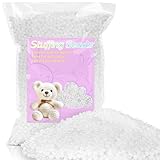
- Premium Polyethylene Beads: You'll receive 420g/14.8oz of high-quality plastic stuffing beads in vacuum-sealed packaging.Perfect for handmade weighted decor, cushions, bean bags and sewing projects
- Ultra-Durable and Reusable: Our counterweight filler beads are made of high quality plastic that is hard and unbreakable. Tiny clear filler beads are odorless, hard, washable or reusable.Ideal for long-term use in stuffed animals, furniture weighting, and craft projects.
- Weighted Filler: These small filler beads make great filler material. It can be placed at the bottom of crafts or crochet doll to add weight and make the item more dimensional and less likely to blow over or come loose. We believe our poly pellets will bring you a good crafting experience.
- Versatile: Our plastic beads are suitable stuffing for most crafts you want to make, weighted beads not only can they be used to stuffed animals,crochet hooks and plush dolls, but they can also be used to add weight to lap blankets or pillows for added comfort, and you can use them to easily fill your holiday decorations such as Christmas stockings, Halloween decorations, etc. to add comfort and enhance the sensory experience.
- Use Caution: If using filler beads, keep away from children and pets. Since the poly pellets are small, small parts may pose choking or ingestion hazard. Adult use only.
It helps to separate terms that are often collapsed into one:
Free tools Windows power users keep installed
One-click scans. No signup required.
- Chemical recycling uses a controlled process to break a polymer into recoverable chemical components. The study demonstrated methanolysis for PAX.
- Hydrolytic depolymerization is bond cleavage involving water. The researchers reported eventual depolymerization in room-temperature water.
- Biodegradation means microorganisms break down a material or its products under defined conditions. It requires suitable tests; water exposure alone does not demonstrate it.
- Composting is a managed biodegradation route under specified conditions. No compostability certification or result follows automatically from the study.
- Environmental degradation concerns uncontrolled settings such as soil, rivers, seas, sunlight, and landfills. Each can produce different outcomes.
Nor does chemical degradability guarantee that no microplastics or persistent residues could form during partial breakdown. The study did not provide a complete environmental-fate assessment for commercial articles with pigments, coatings, adhesives, fillers, or other additives. Their effects, as well as the toxicity of intermediates and residues, would need separate evaluation.
Plant-based does not automatically mean lower impact
Using non-edible biomass is attractive because it can avoid direct reliance on food crops. But plant origin alone does not establish lower greenhouse-gas emissions, low toxicity, or a benign end of life. The PAX route uses glyoxylic acid and requires fractionation, purification, polymerization, and conversion. The environmental balance depends on how the feedstock is sourced and transported, how reagents and energy are produced, what wastes are generated, and how the finished product is managed.
Rank #4

- POLYPROPYLENE PELLETS: Our 1 lb weighted polypropylene pellets are made from BPA‑free polypropylene, ensuring durability for all your crafting needs while providing a reliable and safe solution for weighted items
- VERSATILE USAGE: These weighted stuffing beads can be used for a variety of applications, including bean bag filler, stuffed animals, handmade dolls, blankets, and crafts, making them an ideal choice for artisans and DIY enthusiasts
- SMOOTH EDGES FOR SAFETY: Each polypropylene pellet features smooth edges and rounded contours, ensuring a safe and enjoyable crafting experience while enhancing the overall quality of your finished products
- WASHABLE AND EASY TO MAINTAIN : Our polypropylene weighted stuffing beads are washable, allowing you to maintain hygiene in your stuffed animals and other creations, ensuring they look great and last longer
- PERFECT CHOICE : These versatile filling beads add stability and weight to handicrafts, preventing toppling while enhancing three-dimensionality. Use them to stuff crochet, add heft to lap blankets and pillows for extra comfort, or pair with fairy lights in glass bottles for a decorative, ambient display
A useful comparison would assess a specific product and its full life cycle against realistic alternatives, including recycled PET, reuse, or another packaging material. It would also account for whether the product actually enters the collection or recycling route it needs. A 2026 review of bioplastics likewise emphasizes that degradation pathways, chemical leaching, additives, life-cycle impacts, and waste-system fit all matter—not just the “bioplastic” label. That review offers broader context, not a product-specific verdict on PAX.
Independent reader supportYour contribution helps us test, update, and keep practical guides available for everyone.Is it recyclable in ordinary systems, or available to buy?
The paper demonstrated chemical recycling in a research setting; it did not show that PAX belongs in a household PET recycling bin or can be mechanically recycled indefinitely. Existing recyclers would need ways to identify and sort it, and a commercial chemical-recycling route would need collection, reagent or solvent recovery, purification, adequate scale, and buyers for the recovered chemicals.
PC Slower Than It Used to Be?
A free scan shows the junk files, broken settings and background clutter dragging Windows down - then fixes them in one click.Free scan · Windows 10 & 11Crashes, No Sound, or Screen Glitches?
Random freezes, missing sound and display glitches usually trace back to one bad driver. Find and replace yours safely.Free scan · under a minuteThe study also does not establish a consumer product, commercial resin supply, food-contact approval, compostability certification, cost parity, or mature supply chain. The processing demonstrations show that researchers could shape the material using several techniques; they do not prove continuous mass production or qualification for a particular package. On the evidence reported, PAX is an experimental research material, not a plastic readers can assume is currently available as a household substitute for PET.
Best Value
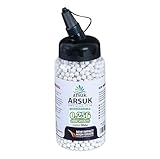
- Smooth & precise performance: lightweight 6mm airsoft BBs designed for consistent accuracy paths and reliable accuracy, suitable for both beginners and experienced players
- Seamless plastic construction: made from polished ABS plastic to help reduce jamming and support efficient feeding during extended play
- Balanced weight: each 0.25g BB is evenly crafted to promote stable trajectories and consistent accuracy during practice or recreational play
- Universal compatibility: fits standard 6mm airsoft equipment, including spring‑powered and gas‑powered models for versatile use across play styles
- Ideal for training & recreation: well‑suited for target practice, competitive games, and skill development, offering smooth feeding and consistent accuracy
What would need to be proven before it could replace PET?
Replacement depends on the use. A packaging maker would need to compare a particular PAX formulation with the relevant PET grade for performance, shelf life, water resistance, thermal conditions, and manufacturing. It would also need evidence on long-term aging, food-contact safety if relevant, production economics, and a workable end-of-life route.
The key environmental tests are equally specific: standardized biodegradation studies in defined settings; fate and toxicity of breakdown products; behavior of additives and multilayer constructions; and life-cycle analysis using realistic feedstock, chemical, and energy assumptions. A favorable reaction in a laboratory does not answer all of those questions.
Other options have their own trade-offs. Recycled PET uses an established material and recycling ecosystem in many markets but remains persistent if littered. Bio-PET can use plant feedstock while remaining PET-like and not automatically biodegradable. PLA, PHA, PEF, paper, and molded fiber each have different performance, processing, and waste-system requirements. Reuse can avoid repeated single-use production but depends on durable design, washing, reverse logistics, and repeated use. The sensible question is not which material is universally “greenest,” but which option meets the job with the lowest total impact in a defined system.
The Tool Desk
Outbyte Driver Updater FREEFix the driver behind crashes, sound loss and screen glitchesFind Drivers →Outbyte PC Repair FREEClear out junk files and repair common Windows errorsFree Scan →Verdict
The EPFL study is a meaningful materials-science result: it produced strong PAX polyesters from non-edible plant-derived sugars, demonstrated several processing methods, and showed chemical-recycling and water-mediated depolymerization pathways. The study supports describing the material as plant-derived, promising in selected PET comparisons, and chemically recyclable at laboratory scale. It does not support the unqualified claim that it has been proven to biodegrade into sugars in the environment or that it is ready to replace commercial PET today.
Quick Recap
Product prices and availability are accurate as of the date/time indicated and are subject to change. Any price and availability information displayed on Amazon at the time of purchase will apply.

