Recommended Free Tools
Some links on this page are affiliate links: if you buy through them we may earn a commission, at no extra cost to you.
If Noctua fans in a Cisco SG250-26P spin for roughly five seconds during startup and then stop, do not assume the fans are defective. The documented symptom is more consistent with a compatibility problem involving the switch’s fan voltage, connector wiring, tachometer signal, or control circuit. Verify the model, pinout, and voltage before modifying the switch further.
Short answer
The SG250-26P may briefly power a replacement fan during boot and then change the fan-control state. A Noctua fan that starts at full voltage can stop when the switch lowers or removes power, rejects its RPM signal, or detects behavior it does not expect. The exact SG250-26P fan-control circuit is not documented in the available Cisco material, so there is no proven universal fix.
Start with these checks:
- Confirm that the switch is an SG250-26P, not the fanless SG250-26, SG250-26HP, SG200-26P, or another model.
- Confirm that the replacement is a 12 V fan and that its wiring matches the Cisco board connector.
- Measure the fan-rail voltage while the fan starts and again when it stops.
- Test the fan directly from a regulated 12 V supply, without a low-noise adapter.
- Do not permanently bypass tachometer monitoring until cooling and fault detection have been proven.
Confirm the exact switch
Cisco identifies the SG250-26P as a 26-port Gigabit PoE Smart Switch. The P suffix matters: this model has a 195 W PoE budget and two internal fans. Cisco lists approximately 36.0 dB acoustics at 0–30 °C and 53.7 dB at 50 °C. See Cisco’s SG250 series information, product datasheet, and product specifications.
Do not use the fanless SG250-26 as a thermal or fan-layout reference. Regional SKU suffixes such as -K9-NA, -K9-EU, and -K9-UK primarily identify regional configurations, but they do not prove that every hardware revision has identical fan wiring. Instructions for SG350, SG250-26HP, or Netgear switches should not be transferred without checking the actual hardware.
#1 Best Overall
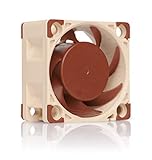
- Premium quiet fan, 40x40x20 mm, 12V, 4-pin PWM, max. 5000 RPM, max. 14.9 dB(A), >150,000 h MTTF
- Award-winning A-series design with Flow Acceleration Channels and Advanced Acoustic Optimisation frame for superior quiet cooling performance
- 40x20mm size ideal for 1U servers or replacing fans in network and storage equipment (routers, switches, NAS etc.) or other devices such as DVRs
- 4-pin PWM version for automatic speed control via 4-pin PWM fan headers, 5000rpm maximum speed (4400rpm with supplied Low-Noise Adaptor)
- Includes anti-vibration mounts, fan screws, extension cable, y-cable and OmniJoin adaptor set for connecting the fan to proprietary fan headers
Which Noctua fan is installed?
| Model | Relevant characteristics | Compatibility warning |
|---|---|---|
| NF-A4x20 FLX | 40 × 40 × 20 mm, 12 V, three-pin, 8 V starting voltage, 0.05 A maximum current, up to 5.53 CFM and 2.26 mm H₂O | Mechanically plausible, but not proven electrically compatible with the Cisco connector or controller |
| NF-A4x20 PWM | 40 × 40 × 20 mm, 12 V, four-pin PWM, 8 V starting voltage, 0.05 A maximum current | Requires the Cisco interface to support the relevant four-wire/PWM arrangement |
| NF-A4x20 5V | Designed for 5 V systems | Do not connect it to a typical 12 V fan rail; it may be destroyed |
For the FLX model, Noctua documents the yellow conductor as the RPM/tachometer signal. On the PWM model, the blue conductor is the PWM control input. These are Noctua’s standard assignments, not proof that Cisco uses the same connector order. Noctua also cautions that standard fan pin assignments do not guarantee compatibility with a proprietary appliance connector; see its fan pin-assignment guidance.
Why the fan starts and then stops
1. The Cisco fan rail drops below the usable voltage
The switch may apply full voltage during startup and then reduce it after boot. The NF-A4x20 FLX and PWM specifications list an 8 V starting voltage, but Noctua does not provide a universal “holding voltage” for every installation. If the Cisco rail falls too low after startup, the fan can begin moving and then stall. Measure this transition rather than assuming a threshold.
2. The connector is mapped incorrectly
A three-pin Noctua plug is not automatically interchangeable with a Cisco two-, three-, or four-wire connector. Connector shape, keying, and wire colors can differ. Reversing polarity can prevent operation or damage the fan and switch circuitry.
Before disconnecting anything, photograph the original fan and record:
- the number of conductors;
- the connector shape and keyed side;
- the wire order at the Cisco board connector;
- the wire colors at the original fan;
- whether either fan has a tachometer lead; and
- whether both fan connectors are wired identically.
Trace the board-side pins and use a multimeter. Do not rely on black-to-black or red-to-red assumptions.
Rank #2
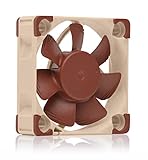
- Premium quiet fan, 40x40x10 mm, 12V, 3-pin Molex, 4500/3700 RPM, max. 17.9 dB(A), >150,000 h MTTF
- Award-winning 40x10mm A-series fan with Flow Acceleration Channels and Advanced Acoustic Optimisation frame for superior quiet cooling performance
- Ideal replacement for noisy or broken 12V 4cm fans in 3D printers, DVRs, NAS, switches, routers, other network and storage devices, etc.
- 3-pin 12V FLX version can be run 4500 or 3700 rpm using the supplied Low-Noise Adaptors to fine-tune the fan for maximum airflow or near-silent operation
- Includes anti-vibration mounts, fan screws, Low-Noise Adaptor, extension cable and OmniJoin adaptor set for connecting the fan to proprietary fan headers
3. The controller expects a tachometer signal
It is plausible that the switch monitors RPM, current, or both and changes the fan state when the replacement does not behave like the original. A missing tach signal and an incompatible tach waveform could produce similar symptoms. However, the available Cisco documentation does not establish the SG250-26P’s exact monitoring circuit, so this remains a hypothesis—not a confirmed explanation.
4. A low-noise adapter reduces voltage too far
Do not install Noctua’s low-noise adapter during initial testing. It adds resistance and can reduce the voltage available to the fan. First establish whether the fan runs continuously from the Cisco connection without the adapter.
5. The replacement does not provide adequate cooling
The SG250-26P is a PoE switch with an internal power supply and two fans. Cooling demand rises with PoE load, warm ambient air, blocked vents, dust, and active uplinks or SFPs. Noctua’s published airflow and static-pressure figures are maximum specifications, not guaranteed values inside this chassis. Preserve the original airflow direction and test under the highest expected PoE load.
Safe diagnostic procedure
1. Power down and document the original wiring
Unplug the switch before opening it. Opening the chassis creates electrical, mechanical, and possible warranty risks. Photograph the original fan wiring and label each board-side pin. Keep clear of the mains-voltage power-supply section when the switch is energized.
2. Measure the Cisco fan supply
With the chassis safely positioned and loose wires secured:
Rank #3
- Premium quiet fan, 40x40x10 mm, 5V, 3-pin Molex, 4500 RPM, 17.9 dB(A), >150,000 h MTTF
- Award-winning 40x10mm A-series fan with Flow Acceleration Channels and Advanced Acoustic Optimisation frame for superior quiet cooling performance
- Ideal replacement for noisy or broken 5V 4cm fans in 3D printers, DVRs, NAS, switches, routers, other network and storage devices, etc.
- 3-pin 5V version with 4500rpm, not to be used at 12V (such as in PC environments)
- Includes anti-vibration mounts, fan screws, extension cable and OmniJoin adaptor set for connecting the fan to proprietary fan headers
- Identify ground and the suspected fan-supply pin using the original wiring and a multimeter.
- Power on the switch and measure the voltage as the fan starts.
- Continue measuring for at least 10–15 seconds.
- Record the voltage while running and immediately before the Noctua stops.
- Note whether the voltage falls to zero or merely drops to a lower level.
Compare the result with the 8 V starting specification of the 12 V NF-A4x20 FLX or PWM. A rail below that value can explain failure to start. A rail that falls below the fan’s required running voltage can explain a start-then-stop event, but that running threshold must be measured rather than invented.
3. Test the fan independently
Use a known-good, regulated 12 V supply with correct polarity. Confirm that the Noctua starts reliably and remains running. Repeat without the low-noise adapter. Never connect the 5 V model to 12 V.
If the fan runs continuously on clean 12 V but stops on the Cisco board, the fan itself is less likely to be defective. Investigate the Cisco rail, pinout, control method, or tachometer behavior.
4. Isolate the tachometer lead as a diagnostic test
If the supply and polarity are correct, connect only the fan’s ground and supply, leaving the tachometer lead disconnected and insulated. Then observe whether the fan remains powered after boot.
If it keeps running, the controller may be reacting to a missing or incompatible RPM signal. This is only a diagnostic experiment. The switch may require tach feedback to detect a stalled fan, and a fan that physically spins may still leave the switch unable to detect a cooling failure. Do not leave exposed conductors loose inside the chassis or treat this test as a safe permanent modification without long-duration thermal testing.
Windows Errors? Fix Them Before They Spread
Repair common Windows errors and clear accumulated junk for a smoother, more stable PC - no reinstall needed.Free scan · no reinstallOutdated Drivers Are Slowing You Down
One free scan finds every outdated or missing driver and matches the right update for your exact hardware.Free scan · exact hardware matchRank #4
- Premium quiet fan, 40x40x20 mm, 12V, 3-pin Molex, 5000/4400/370 RPM, max. 14.9 dB(A), >150,000 h MTTF
- Award-winning A-series design with Flow Acceleration Channels and Advanced Acoustic Optimisation frame for superior quiet cooling performance
- 40x20mm size ideal for 1U applications or replacing fans in network and storage equipment (routers, switches, NAS etc.) or other devices such as DVRs
- 3-pin FLX version provides 5000/4400/3700rpm speed settings via Low-Noise Adaptors to fine-tune the fan for maximum airflow or near-silent operation
- Includes anti-vibration mounts, fan screws, extension cable and OmniJoin adaptor set for connecting the fan to proprietary fan headers
Interpreting the symptoms
| Observation | More likely explanation |
|---|---|
| Fan never moves | No power, wrong polarity, incorrect connector, or voltage below the starting requirement |
| Fan starts and stops immediately | Controller test, tachometer rejection, protection response, or incorrect wiring |
| Fan runs only from direct 12 V | Voltage-controlled, current-limited, or otherwise incompatible Cisco fan rail |
| Fan runs when tach is disconnected | Possible tach-monitoring or tach-waveform incompatibility |
| Original fan runs but Noctua does not | Replacement compatibility problem rather than a general switch fault |
| Both replacement fans stop identically | Shared wiring, controller behavior, or firmware policy is more likely than two defective fans |
Is a Noctua replacement safe?
Only if it remains running continuously after boot, has the correct polarity and pin mapping, preserves airflow direction, and keeps the switch adequately cool under real operating conditions. Test with the actual PoE load, warmest expected ambient temperature, normal rack clearance, and closed cabinet conditions if applicable.
“Quieter” is not the same as “safer.” A replacement with lower airflow or static pressure may allow internal temperatures to rise while appearing to work normally. Do not run the switch with one fan disconnected, and do not leave it unattended while the cooling system is uncertain.
When to stop modifying the switch
Reinstall the original fans or stop the conversion if the pinout cannot be established, the fan repeatedly shuts down, reliable temperature or fan-fault monitoring is unavailable, or the switch operates in a hot or mission-critical environment. Power it down immediately if you see instability, repeated alarms, overheating, or an unusual odor.
After reinstalling the original fans, confirm that both run continuously through boot and that the switch behaves normally. If the original fans also fail, diagnose the switch itself. If the originals work and the Noctuas do not, the practical choices are the original replacement fan, an electrically compatible 12 V fan with matching tach behavior, or replacement of the switch.
Replacement options
The SG250 series is now an end-of-sale/end-of-life product family for selected models. Cisco’s end-of-life notice lists the SG250-26P and regional Cisco Business CBS250-24P-4G models as replacement paths. A current supported switch is generally the better choice for production networks, even if a used SG250-26P costs less, because an older unit also carries power-supply, fan, and support risks.
Best Value
- Premium quiet fan, 40x40x10 mm, 12V, 4-pin PWM, max. 5000 RPM, max. 19.6 dB(A), >150,000 h MTTF
- Award-winning A-series design with Flow Acceleration Channels and Advanced Acoustic Optimisation frame for superior quiet cooling performance
- 40x10mm size ideal for 1U servers or replacing fans in network and storage equipment (routers, switches, NAS etc.) or other devices such as DVRs
- 4-pin PWM version for automatic speed control via 4-pin PWM fan headers, broad 1000-5000rpm speed range (3700rpm max. with supplied Low-Noise Adaptor)
- Includes anti-vibration mounts, fan screws, Low-Noise Adaptor, extension cable and OmniJoin adaptor set for connecting the fan to proprietary fan headers
A fanless switch is not an automatic substitute: it must provide the required port count, PoE budget, airflow design, and thermal capacity. Likewise, a Noctua OmniJoin-style adapter can help with connector termination, but it cannot correct the wrong voltage, control method, tachometer behavior, or insufficient airflow.
FAQ
Can I use the NF-A4x20 5V?
Only if measurement proves that the Cisco fan supply is genuinely 5 V. Do not connect the 5 V model to an unverified or typical 12 V appliance rail.
Can I use the PWM version?
Only after confirming that the switch provides a compatible four-wire PWM interface. The extra wire does not make it universally compatible.
The Tool Desk
Outbyte PC Repair FREEClear out junk files and repair common Windows errorsFree Scan →Outbyte Driver Updater FREEScan for outdated or missing drivers - takes under a minuteDriver Scan →Does a five-second spin-up prove the Noctua is bad?
No. The same symptom can result from the Cisco controller, voltage rail, wiring, or tachometer expectations.
Frequently Asked Questions
Can I leave the tachometer wire disconnected permanently?
Not as a general recommendation. It may help identify tach-related incompatibility, but it can also disable stalled-fan detection and should not be made permanent without verified monitoring and thermal testing.
Can the SG250-26P run safely with one fan?
Do not assume so. The switch has two fans and its required cooling margin depends on PoE load, ambient temperature, airflow, and hardware condition.
Quick Recap
Product prices and availability are accurate as of the date/time indicated and are subject to change. Any price and availability information displayed on Amazon at the time of purchase will apply.
Do these 3 things before closing this tab:
1Repair Windows errors before they cause bigger problems2Scan for outdated or missing drivers - takes under a minute3Clear out junk files and repair common Windows errors
