Quick wins for a faster PC:
Scan for outdated or missing drivers - takes under a minuteDriver Scan →Clear out junk files and repair common Windows errorsFree Scan →Some links on this page are affiliate links: if you buy through them we may earn a commission, at no extra cost to you.
For most competitive FPS players who want smooth, tear-free motion, enable G-SYNC, enable Vertical sync in NVIDIA Control Panel, disable in-game V-SYNC, use NVIDIA Reflex where available, and cap the frame rate below the monitor’s maximum refresh rate. A starting point is refresh rate minus 3 FPS.
Turn G-SYNC off only when minimum possible latency matters more than tearing, your system can sustain frame rates well above the monitor’s refresh rate, and testing shows a meaningful advantage.
The best G-SYNC settings at a glance
| Setting | Recommended tear-free competitive configuration | Lowest-latency alternative |
|---|---|---|
| G-SYNC | On | Off |
| NVIDIA Control Panel V-SYNC | On | Off |
| In-game V-SYNC | Off | Off |
| NVIDIA Reflex | On, when supported | On, when supported |
| Low Latency Mode | Off when Reflex is active | Test On or Ultra when Reflex is unavailable |
| Frame rate | Below the monitor’s refresh ceiling | Uncapped or aggressively capped |
| Display mode | Exclusive fullscreen where practical; enable windowed G-SYNC for borderless games | Whichever produces the lowest measured latency |
G-SYNC does not increase your GPU’s frame rate. It lets the monitor vary its refresh timing to follow completed frames from the GPU within the display’s variable-refresh range. That reduces tearing and can make uneven frame delivery look smoother. NVIDIA’s G-SYNC documentation describes the technology and its Control Panel setup.
Recommended Free Tools
Two valid competitive configurations
1. Competitive, tear-free G-SYNC
Use this when tearing distracts you, frame rates vary, or you want smoother target tracking:
#1 Best Overall
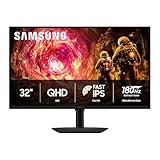
- Samsung’s 32” Odyssey G5 QHD Gaming Monitor delivers brilliant visuals for exhilarating gameplay that’s more immersive than ever before.
- QHD resolution (2560 x 1440) boasts incredibly detailed, pin-sharp images.
- With a wide 178° viewing angle, the IPS panel consistently delivers crisp, clear hues from various viewpoints.
- 180Hz Refresh Rate and 1ms response time (GtG) allow fast reactions for ultra-smooth gaming, plus G-Sync compatibility syncs the GPU and panel to reduce choppiness, screen lag, and image tearing.
- HDR10 provides brighter highlights and nuanced shadows for added depth.
- G-SYNC on
- Driver V-SYNC on
- In-game V-SYNC off
- Frame rate capped below the monitor’s maximum refresh rate
- Reflex on where supported
The driver V-SYNC setting acts as a safeguard if the game reaches the display’s refresh ceiling. The frame cap is intended to keep that ceiling from being reached during normal play. This is a common configuration, not a universal law: game engines, drivers, presentation modes, monitor firmware, and Reflex implementations can change the result.
2. Absolute-lowest-latency rendering
Use this when you accept tearing and prioritize raw latency above presentation consistency:
- G-SYNC off
- Driver and in-game V-SYNC off
- Reflex on where supported
- Uncapped or aggressively capped FPS
This can avoid synchronization behavior at the refresh ceiling, but it may produce visible tearing and less consistent frame pacing. It is not automatically better for aim or performance. Compare both modes in the exact game you play.
The Tool Desk
Outbyte PC Repair FREEClear out junk files and repair common Windows errorsFree Scan →Outbyte Driver Updater FREEFix the driver behind crashes, sound loss and screen glitchesFind Drivers →Why the V-SYNC recommendation is confusing
“V-SYNC off” can refer to two different controls. In the usual tear-free G-SYNC setup, in-game V-SYNC is off, while Vertical sync in NVIDIA Control Panel is on. The latter helps prevent the game from exceeding the monitor’s VRR ceiling.
G-SYNC and Fast Sync are separate technologies and may be used together, but combining synchronization modes can produce different results across games. NVIDIA explains their relationship in its Fast Sync support documentation. Test the exact title rather than assuming that one V-SYNC combination is optimal everywhere.
Rank #2
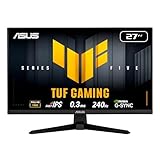
- 27-inch Full HD Fast IPS Display: Features a 1920 x 1080 resolution Fast IPS panel with 240Hz refresh rate for fast paced gameplay
- Ultra-Fast Response Time: ASUS Fast IPS technology enables a 0.3ms (min) response time for sharp gaming visuals with high frame rates
- Adaptive Sync Technology: FreeSync Premium and G-Sync compatible delivers a seamless, tear-free gaming experience
- Advanced Motion Blur Reduction: ASUS Extreme Low Motion Blur Sync (ELMB SYNC) technology enables ELMB together with variable refresh rate, eliminating ghosting and tearing for sharp gaming visuals with high frame rates
- Convenient Monitor Control: DisplayWidget Center enables easy OSD access and monitor settings adjustments with a mouse
How to choose the FPS cap
Start approximately three frames per second below the monitor’s selected refresh rate:
| Refresh rate | Starting cap |
|---|---|
| 144 Hz | 141 FPS |
| 165 Hz | 162 FPS |
| 180 Hz | 177 FPS |
| 240 Hz | 237 FPS |
| 360 Hz | 357 FPS |
| 500 Hz | 497 FPS |
| 540 Hz | 537 FPS |
This is a starting point, not an NVIDIA guarantee. Frame-limiters differ in accuracy, and an overclocked refresh rate, driver behavior, game engine, or monitor can require a larger margin. If the display still touches its ceiling, lower the cap by another 2–5 FPS.
Free tools Windows power users keep installed
One-click scans. No signup required.
Prioritize, in order:
- Consistent frame times
- Sustained FPS
- Low render and input latency
- Motion clarity
- Peak benchmark FPS
A stable 300 FPS may feel better than fluctuating 500 FPS on a 360 Hz monitor if the higher setting causes CPU spikes, queueing, thermal throttling, or uneven frame delivery. NVIDIA discusses frame limiting and VRR operation in its Max Frame Rate guidance.
Reflex versus NVIDIA Low Latency Mode
NVIDIA Reflex is integrated into supported games and coordinates CPU and GPU work for just-in-time rendering. It should normally be your first latency setting when the game supports it.
Low Latency Mode is a driver feature for games without Reflex. Try On first. Test Ultra only if the game is GPU-bound and frame pacing remains stable. Do not globally force Ultra in a Reflex-supported game without testing; the two systems can be redundant or interact unpredictably.
Rank #3

- High-Resolution QHD Gaming Display: 27-inch QHD (2560 x 1440) gaming monitor with 180Hz refresh rate designed for professional gamers and immersive gameplay
- ASUS Extreme Low Motion Blur Sync Technology: ELMB Sync technology enables ELMB and variable-refresh-rate technologies to work simultaneously to eliminate ghosting and tearing for sharp gaming visuals with high frame rates
- Advanced Synchronization Technologies: FreeSync Premium, G-Sync compatible and AdaptiveSync technology delivers a seamless, tear-free gaming experience by enabling VRR (variable refresh rate) by default
- High Dynamic Range Support: HDR technology supports HDR-10 format to enhance bright and dark areas for improved visual depth and contrast
- Package Contents: DisplayPort cable, L-shaped Screwdriver, Power cord, Power adapter, Quick start guide, Warranty Card
Reflex Boost can hold GPU clocks higher. It may help in some GPU-limited situations, but it can increase power use, temperature, and fan noise. Measure rather than assuming it is beneficial.
What’s actually slowing this PC down?
Pick the symptom - the matching free tool is one click away.
Exact setup path
Monitor and Windows
- Open the monitor’s on-screen display and enable Adaptive-Sync, VRR, or G-SYNC, depending on the monitor’s terminology.
- Disable strobing modes initially.
- Open Settings → System → Display → Advanced display in Windows.
- Select the correct monitor and choose its highest stable refresh rate.
- Confirm the cable is connected to the NVIDIA GPU, not an integrated-graphics output.
NVIDIA Control Panel
- Right-click the desktop and open NVIDIA Control Panel.
- Go to Display → Set up G-SYNC.
- Select Enable G-SYNC, G-SYNC Compatible.
- Choose Enable for full screen mode, or choose windowed and full-screen mode if the game uses borderless presentation.
- Select the intended monitor.
- Open Manage 3D settings → Program Settings and select the FPS game.
- Set Monitor Technology to G-SYNC/G-SYNC Compatible when the option is available.
- Set Vertical sync to On for the tear-free configuration.
- Set Max Frame Rate to refresh rate minus 3 FPS if the game’s limiter is unreliable.
- Set Low Latency Mode to Off when Reflex is active; otherwise test On and Ultra separately.
- Apply the settings and restart the game.
In the game, start with Reflex On, V-SYNC Off, a stable frame cap, and fullscreen or borderless mode according to the game’s implementation. Reduce GPU- or CPU-heavy settings if they cause unstable frame times. Frame generation is generally a poor default for latency-focused competitive FPS play unless you have tested the specific title carefully.
How to verify G-SYNC is working
- In NVIDIA Control Panel, enable Display → G-SYNC Indicator.
- Launch the game and confirm the indicator appears.
- Change the frame cap and observe whether refresh behavior follows the game’s frame rate.
- Use a frame-time graph, not only an average FPS counter.
- Compare latency with and without G-SYNC using the same scene, cap, graphics settings, and input device.
The indicator confirms that G-SYNC is engaged; it does not prove that your cap, V-SYNC, Reflex, or monitor mode is optimal.
Compatible monitors and mice may support NVIDIA Reflex Analyzer. It measures the supported click-to-photon path under compatible game and hardware conditions. It is not a universal measurement of every source of latency.
G-SYNC versus G-SYNC Compatible
Traditional G-SYNC monitors use an NVIDIA display module. Supported models generally offer a more controlled VRR feature set, including variable overdrive on some displays. G-SYNC Compatible monitors use the display’s Adaptive-Sync implementation and have been validated by NVIDIA, but certification does not mean every model has identical VRR range, overdrive, HDR, flicker, or strobing behavior.
Windows Errors? Fix Them Before They Spread
Repair common Windows errors and clear accumulated junk for a smoother, more stable PC - no reinstall needed.Free scan · no reinstallCrashes, No Sound, or Screen Glitches?
Random freezes, missing sound and display glitches usually trace back to one bad driver. Find and replace yours safely.Free scan · under a minuteRank #4

- 27” FULL HD IPS DISPLAY: Experience crisp 1920x1080 resolution and vibrant colors on a 27-inch widescreen IPS panel with wide 178° viewing angles and a 16:9 aspect ratio.
- 240Hz Native / 260Hz Overclocked Refresh Rate & 0.5ms MPRT Response Time: Dominate fast-paced games with ultra-smooth motion and razor-sharp visuals, thanks to a 240Hz native refresh rate with up to 260Hz overclocking over both HDMI and DisplayPort, plus an ultra-fast 0.5ms (MPRT) response time.
- ADAPTIVE-SYNC TECHNOLOGY: Enjoy tear-free, stutter-free gameplay with Adaptive-Sync support that keeps visuals fluid and synchronized with your GPU.
- ILT-ADJUSTABLE & VESA COMPATIBLE: Customize your setup with tilt functionality (-3° ~ 21°) and 100x100mm VESA mount support for ergonomic flexibility.
- FLICKER-FREE + LOW POWER USAGE: Flicker-Free technology helps reduce eye strain during long sessions, and Eco Mode keeps power usage efficient (22W typical).
G-SYNC Ultimate is a premium category focused on display quality and HDR as well as VRR. Check NVIDIA’s current monitor directory for certification and supported features. The label should not replace checking response behavior, input processing, resolution, ergonomics, and the monitor’s actual VRR performance.
Refresh rate and motion clarity
A 240 Hz display refreshes approximately every 4.17 ms; 360 Hz reduces that interval to approximately 2.78 ms. The improvement is real, but it requires sustained frame rates and becomes progressively harder to notice at higher refresh rates. NVIDIA positions 360 Hz displays for competitive gaming in its 360 Hz overview.
Refresh rate is not the same as frame rate, pixel response, input latency, or motion clarity. Motion clarity depends on all of them, plus frame pacing and persistence. A 600 Hz monitor running a game at 250 FPS cannot provide the full benefit of 600 Hz.
Strobing features such as ULMB, ELMB, DyAc, and G-SYNC Pulsar can improve clarity by reducing visible persistence, but they usually require stable frame rates and a suitable refresh target. They can also reduce brightness, cause flicker, expose crosstalk or double images, and be incompatible with VRR. Pulsar availability depends on the monitor model. If motion looks worse, return to ordinary VRR and compare in a controlled scene.
Troubleshooting
G-SYNC is missing
- Connect the display directly to the NVIDIA GPU.
- Enable Adaptive-Sync or VRR in the monitor OSD.
- Install a current compatible driver.
- Use a compatible DisplayPort or HDMI path.
- Set the display as primary where required.
- Check whether HDR, DSC, KVM, or another monitor mode disables VRR.
The indicator appears but tearing remains
- Lower the cap by 2–5 FPS.
- Use driver V-SYNC On and in-game V-SYNC Off.
- Test exclusive fullscreen.
- Disable HDR and strobing temporarily.
- Test another game.
- Reset the game-specific NVIDIA profile.
What looks like tearing may instead be overdrive distortion or strobing crosstalk.
Best Value
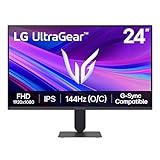
- Vivid Color, Fast Response, Total Control - The 24" UltraGear FHD gaming monitor delivers vivid HDR10 color, ultra-smooth 120Hz speed, and 1ms MBR clarity. G-SYNC compatibility & FreeSync keep gameplay tear-free. The sleek, slim design keep you focused and in control.
- Vivid Color That Puts You in the Action - Step onto the battlefield with HDR10 visuals and up to 99% sRGB color gamut coverage. The IPS display delivers rich, vivid tones, so every explosion, shadow, and landscape appears exactly as the developers intended.
- 120Hz Native Speed (144Hz Overclock) - Enjoy fluid, crystal-clear gameplay with a 120Hz native refresh rate, boosted to 144Hz when overclocked. Minimized motion blur keeps every frame sharp, so you can stay locked in on the action.
- 1ms MBR: Fast-Paced Speed to Victory - 1ms Motion Blur Reduction (MBR) keeps gameplay smooth and sharp, cutting blur and ghosting so fast-moving action stays clear—helping you stay competitive when every millisecond counts.
- NVIDIA G-SYNC Compatible & AMD FreeSync - NVIDIA G-SYNC Compatible and AMD FreeSync deliver smooth, tear-free, low-latency gaming with high refresh rates—so every frame stays sharp.
Flicker or brightness pulsing
Large FPS swings, low-FPS operation near the bottom of the VRR range, OLED near-black behavior, HDR/VRR interaction, and unstable overdrive can all contribute. Use a steadier cap, reduce demanding settings, try another overdrive mode, update monitor firmware, and compare VRR with fixed refresh. If the issue persists, fixed refresh or another display may be preferable.
Stutter or black screens
Use one primary frame limiter, disable driver Low Latency Mode when Reflex is active, and test fullscreen versus borderless. Also check CPU saturation, shader compilation, asset streaming, overlays, capture tools, incorrect refresh selection, and repeated entry into and exit from the monitor’s VRR range. A black screen can indicate a cable, bandwidth, DSC, HDR, or monitor-firmware problem rather than G-SYNC itself.
How to test your own best configuration
- Choose a repeatable map, training range, or aim scenario.
- Keep resolution, graphics settings, monitor refresh rate, and mouse settings identical.
- Compare G-SYNC on and off with the same frame cap first.
- Record frame-time graphs, sustained FPS, 1% lows, and any visible tearing or flicker.
- Compare Reflex and driver Low Latency Mode separately, not simultaneously by default.
- Repeat the same aim drills across several sessions.
- Choose the configuration that delivers the best combination of measured latency, stable frame pacing, and usable motion—not the highest average FPS.
Should you buy a high-refresh G-SYNC monitor?
Choose by the frame rate your system can sustain and the type of motion you prefer:
Do these 3 things before closing this tab:
1Repair Windows errors before they cause bigger problems2Fix the driver behind crashes, sound loss and screen glitches3Clear out junk files and repair common Windows errors- 144–180 Hz: A practical starting range for many players. It provides a substantial improvement over ordinary 60/75 Hz displays.
- 240–360 Hz: The competitive sweet spot for systems that can sustain the required FPS. It offers a meaningful reduction in refresh interval without demanding the extreme hardware of the highest-refresh products.
- 500–610 Hz: An esports specialist category. It makes sense when you play lightweight competitive games at several hundred FPS and prioritize motion clarity over resolution, HDR, and general-purpose image quality.
- Dual-mode OLED: Useful when one monitor must serve both competitive FPS and high-quality general gaming. Check the exact G-SYNC Compatible status, burn-in policy, mode-specific refresh limits, and required connection standard.
- Dedicated TN with strobing: May provide exceptionally clear competitive motion and tournament-style ergonomics, but can sacrifice contrast, resolution, and HDR.
As examples of different approaches, ASUS lists the ROG Swift OLED PG27AQWP-G as a dual-mode QHD 540 Hz/FHD 720 Hz G-SYNC Compatible display on its official store. ZOWIE’s XL2586X+ is a 600 Hz Fast TN esports alternative with DyAc 2, not automatically a G-SYNC product. Product specifications, prices, and availability change; manufacturer response-time figures are not complete input-latency measurements.
US price signals observed on official manufacturer pages on August 18, 2026 included $1,199 for the ASUS dual-mode OLED, $999.99 for the ZOWIE XL2586X+, and $799 for the ASUS ROG Strix XG248QSG Ace listing. These are time-specific signals, not permanent prices, and may exclude taxes, shipping, or other fees.
Bottom line
There is no single best G-SYNC setting for every competitive player. For the balanced choice, use G-SYNC On, driver V-SYNC On, in-game V-SYNC Off, Reflex On when available, and a cap below the monitor’s refresh ceiling. For the absolute lowest latency, disable G-SYNC and V-SYNC and accept tearing. Measure both configurations in your actual game: G-SYNC cannot fix low FPS, unstable frame times, slow pixel response, or an underpowered system.
Quick Recap
Product prices and availability are accurate as of the date/time indicated and are subject to change. Any price and availability information displayed on Amazon at the time of purchase will apply.

