Outdated Drivers Are Slowing You Down
One free scan finds every outdated or missing driver and matches the right update for your exact hardware.Free scan · exact hardware matchWindows Errors? Fix Them Before They Spread
Repair common Windows errors and clear accumulated junk for a smoother, more stable PC - no reinstall needed.Free scan · no reinstallSome links on this page are affiliate links: if you buy through them we may earn a commission, at no extra cost to you.
In the United States, a color television typically cost about $400 to $600 during much of the 1960s. Smaller or lower-priced models could fall below that range, while large furniture-style consoles and entertainment centers reached $750 to $800 or more. By 1969, Sears advertised a 20-inch color set for $389.95, but a 23-inch console still cost $629.95.
Those prices made color television a major discretionary purchase—not an everyday appliance for every household. The decade was a transition: color sets moved from expensive status products toward aspirational mainstream goods, while many families continued using cheaper black-and-white televisions.
The short answer: color TV was expensive, but prices fell quickly
There was no single “average” price for a 1960s color television. The amount depended on screen size, brand, cabinet design, whether the set was a table model or console, and whether it included a radio, phonograph, or stereo system.
The Tool Desk
Outbyte PC Repair FREERepair Windows errors before they cause bigger problemsFix Now →Outbyte Driver Updater FREEFix the driver behind crashes, sound loss and screen glitchesFind Drivers →| Period | Representative price | What it suggests |
|---|---|---|
| Early 1960s | About $450–$600 | Color remained an expensive novelty and status purchase. |
| 1963 | $399.95 Admiral; $499.95 Zenith | Competition was beginning to push entry prices downward. |
| Mid-1960s | Roughly $400–$700 | More families could consider color, although it was still costly. |
| Late 1960s | About $390 for a smaller set; over $600 for a large console | Color was becoming more attainable, but premium furniture models remained expensive. |
These are representative advertised or listed prices, not a complete national retail average. A sale price for a small set should not be compared directly with the list price of a large console.
#1 Best Overall

- 4k Ultra HD (2160p resolution): Enjoy breathtaking HDR10 4K movies and TV shows at 4 times the resolution of Full HD, and upscale your current content to Ultra HD-level picture quality.
- High Dynamic Range: Provides a wide range of color details and sharper contrast, from the brightest whites to the deepest blacks.
- All-in-one: Get right to your good stuff. With Fire TV, you can enjoy a world of entertainment from apps like Prime Video, Netflix, Disney+, Hulu, and HBO Max. Plus, stream for free with Fire TV Channels, Pluto TV, Tubi, and more. Access over 1.8 million movies and TV episodes. Subscriptions may be required. Feature and content availability may vary.
- Smart Home: Your smart home hub. Pair Fire TV with compatible smart home devices to see live camera feeds, use AirPlay, control your lighting and thermostat, and more.
- Free Content: Stream for free. Access over 1 million free movies and TV episodes from popular ad-supported streaming apps like Fire TV Channels, Tubi, and Pluto TV. Subscriptions may be required. Feature and content availability may vary.
What did a color TV cost in the early 1960s?
In 1961, Sears advertised a low-priced color television at $449.95. Its larger color-console models reached $579.95.Television Digest, 1961
The $449.95 figure was an advertised low-end price, not the cost of every color set. Buyers paid more for a larger screen, a better-known brand, a more elaborate cabinet, or built-in audio equipment. Delivery, installation, local taxes, and service arrangements could also add to the final bill.
At that point, color television was still a relatively new technology. A family could watch the same programs on a black-and-white set, and color programming was not yet universal. That made the extra cost difficult to justify unless the household valued the novelty, owned a particularly prominent living room, or wanted the newest technology.
Prices began falling by 1963
Price competition became more visible during the decade. In 1963, Time reported that Admiral had reduced its lowest-priced color set to $399.95, while Zenith’s lowest-priced model was listed at $499.95.Time, “Marketing Cheaper Color TV,” July 5, 1963
A price below $400 did not make color television cheap in the modern sense. It meant that manufacturers were beginning to offer smaller or less elaborate models that broadened the potential market. The industry expected more than 750,000 color sets to be sold in 1963—nearly twice the previous year’s total.
Brands competing in the market included RCA, Zenith, Admiral, Sears/Silvertone, Motorola, Philco, General Electric, and Westinghouse. RCA held a particularly strong position in early color television, while Zenith competed with a reputation for engineering and premium products. Market shares varied by year and by the source used to measure them.
Rank #2

- Breathtaking picture: Sharp 4K brings out rich detail on our 55" flat screen TV, while the QLED screen and HDR10 create bright, accurate colors. Roku Smart Picture cleans up incoming TV signals, optimizes them, and chooses the right picture mode.
- Seamless streaming: With fast Wi-Fi and apps that launch in a snap, Roku Select Series TVs get you to your entertainment quickly. You get excellent picture quality, clear sound, automatic updates, and more. It’s simple to use. Hard to outgrow.
- TV, simplified: With setup that only takes minutes, a simple-to-navigate Home Screen, and an uncluttered remote control that does all you need—Roku makes it easier to watch the TV you love.
- A world of free entertainment: Enjoy a huge selection of free live TV, news, sports, movies, shows, and much more—all just a click away.
- More streaming, less searching: With personalized picks right on your Home Screen, quick access to the sports and entertainment you watch most, and fast and easy search in one place—the days of endless scrolling are over.
Not all “1960s TVs” were the same product
Catalog photographs can make it easy to compare unlike products. A small color television, a family-size console, and an entertainment center were all television-related products, but their prices and intended uses differed sharply.
Small or entry-level color sets
- Usually had a smaller screen and less elaborate cabinet.
- Were the most likely route into color ownership for a budget-conscious family.
- Could be advertised at the lower end of the decade’s price range.
Family-size console televisions
- Used a large wood-veneer or furniture-style cabinet.
- Were designed as living-room centerpieces rather than portable appliances.
- Cost more because of their larger screen, cabinet, speakers, and more elaborate construction.
Entertainment centers
Some products combined a color television with a radio, phonograph, or stereo system. Sears examples from 1964 were reported at approximately $750 to $800 depending on configuration.Foundation for Economic Education These were combination furniture-and-electronics systems, not ordinary television receivers, so using their prices as the typical cost of a color TV would exaggerate the market.
Why were the cabinets so large?
A 1960s television was often part of the room’s furniture. Manufacturers used wood veneers and styles such as Mediterranean or Danish Modern to make the set blend with—or dominate—the living room.
Screen size also did not describe the size of the object as a whole. A 21- or 23-inch screen could be housed in a cabinet many times larger than the viewing area. The enclosure accommodated speakers, controls, chassis components, ventilation, and, in combination units, additional audio equipment.
That furniture role affected both price and ownership. The buyer was not simply purchasing a screen; in many cases, the television was a substantial living-room furnishing that had to be delivered, positioned, and eventually repaired in place.
Free tools Windows power users keep installed
One-click scans. No signup required.
What would a 1960s color TV cost in today’s money?
Using general consumer inflation, a color television priced at $400 to $600 in the 1960s represents several thousand dollars in 2026 purchasing power. A $629.95 console purchased in 1969 also translates to substantially more than its original sticker price.
Rank #3
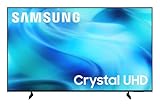
- CRYSTAL PROCESSOR: Powerful processor enhances colors and sharpens details for a vibrant 4K viewing experience. Experience every shade of color as it was meant to be seen in dazzling 4K. Plus, make your movies, TV shows, games and sports look even better with powerful 4K upscaling.
- ENDLESS FREE CONTENT: Watch 2,700+ free streaming options, including 750+ subscription-free channels on Samsung TV Plus. Enjoy news, sports, movies, kids' shows and reality TV — all without a subscription. Discover endless entertainment with new content added regularly, tailored to your mood and interests.*
- MOTION XCELERATOR: Experience clear picture and smooth motion in games and sports. Enjoy smooth motion and clear visuals with technology that estimates and adjusts frame transitions in real time. Whether gaming or watching sports, enjoy up to 4K 60Hz performance that brings every play, move and scene to life with realistic clarity and motion.
- COLOR BOOSTER: Supercharge your color. From fiery reds to sparkling blues, make every color come to life with intensity. Color Booster transforms your content into a visual masterpiece.
- 4K UPSCALING: Upgrades what you watch to crisp 4K clarity. Upgrade your favorite shows, movies and more. Experience incredible details and clarity in every frame, even from lower-quality sources, with advanced upscaling technology.
The exact modern equivalent depends on the original year, the month used, and the reference month in 2026. The U.S. Bureau of Labor Statistics inflation calculator uses the CPI-U for the U.S. city average and all consumer goods and services; it is not a television-specific price index.BLS inflation calculator
That distinction matters. CPI tells us what general purchasing power was represented by the old price. It does not mean a 1960s television offered the same performance as a modern television costing the inflation-adjusted amount. Television technology changed dramatically, and the BLS explains that quality adjustment is necessary when products improve substantially over time.BLS quality-adjustment guidance
The safest interpretation is therefore: a $400–$600 purchase represented a serious household financial commitment, but it should not be described as a direct technological equivalent of a modern luxury television.
Was a color TV expensive compared with wages?
For an individual household, the burden depended on income. A $500 set could be manageable for a professional family with steady earnings but a major commitment for a lower-income household. The same price could also compete with rent, an automobile payment, or another large appliance purchase.
Claims that a color television cost “a year’s salary” are too broad unless they identify the year, occupation, household, and wage measure. The more defensible conclusion is that color television was expensive enough to be a meaningful household milestone, while increasingly accessible to families with room in their budgets.
Why did so many families keep black-and-white sets?
Several practical reasons slowed the transition:
- Lower price: Black-and-white sets cost much less, and an existing set could remain useful for years.
- Limited color programming: Early color ownership had less value when many programs were still broadcast in black and white.
- Shared viewing: Families could watch the same network programs without owning color equipment.
- Repair risk: Color sets were more technically complex and could require specialized servicing.
- Cabinet size: A console required considerable floor space and was not easy to replace casually.
- Waiting for improvement: Some buyers preferred to wait for lower prices, better reliability, and more color programming.
Household access to color was also uneven. National network availability did not mean every local station carried every program in color, and a household could occasionally watch color television at a friend’s house or elsewhere without owning a color set.
Rank #4
- CRYSTAL PROCESSOR: Powerful processor enhances colors and sharpens details for a vibrant 4K viewing experience. Experience every shade of color as it was meant to be seen in dazzling 4K. Plus, make your movies, TV shows, games and sports look even better with powerful 4K upscaling.
- ENDLESS FREE CONTENT: Watch 2,700+ free streaming options, including 750+ subscription-free channels on Samsung TV Plus. Enjoy news, sports, movies, kids' shows and reality TV — all without a subscription. Discover endless entertainment with new content added regularly, tailored to your mood and interests.*
- MOTION XCELERATOR: Experience clear picture and smooth motion in games and sports. Enjoy smooth motion and clear visuals with technology that estimates and adjusts frame transitions in real time. Whether gaming or watching sports, enjoy up to 4K 60Hz performance that brings every play, move and scene to life with realistic clarity and motion.
- COLOR BOOSTER: Supercharge your color. From fiery reds to sparkling blues, make every color come to life with intensity. Color Booster transforms your content into a visual masterpiece.
- 4K UPSCALING: Upgrades what you watch to crisp 4K clarity. Upgrade your favorite shows, movies and more. Experience incredible details and clarity in every frame, even from lower-quality sources, with advanced upscaling technology.
Programming made the purchase more worthwhile
Color television became easier to justify as more major network programming appeared in color. Sports, variety shows, specials, and other visually distinctive broadcasts helped turn color from a technical demonstration into a feature viewers expected.
What’s actually slowing this PC down?
Pick the symptom - the matching free tool is one click away.
Sales growth shows how quickly interest expanded, but sales are not the same as household ownership. Color-TV sales rose from 2.7 million sets in 1965 to 4.7 million in 1966, and the 1966 market was valued at nearly $2.5 billion.Time, 1967 reporting Those figures show a rapidly growing market, not that every household had already replaced its black-and-white set.
Independent reader supportYour contribution helps us test, update, and keep practical guides available for everyone.Why did prices fall?
The decline came from several forces working together:
- Manufacturers gained experience and scale.
- Color picture tubes and chassis designs improved.
- RCA, Zenith, Admiral, Sears, and other brands competed more aggressively.
- Smaller, less expensive models entered the market.
- More consumers accepted color television as useful rather than experimental.
- Expanding color programming increased demand.
- Retailers discounted inventory when manufacturers overestimated demand.
That last factor could produce abrupt price reductions. In 1967, contemporary reporting described warehouses and stockrooms holding roughly 1.3 million color sets, followed by reductions on 1968 models.Time
The late-1960s two-tier market
By 1969, the market clearly offered both lower-priced color televisions and expensive furniture consoles. Television Digest reported a Sears U.S.-made 20-inch color set at $389.95.Television Digest, 1969
At the other end, a period-price compilation lists a 23-inch Sears color console at $629.95.RetroWow period-price compilation The difference was not merely a matter of a few inches of screen size. Cabinet design, furniture styling, speakers, features, brand position, and the intended role in the home all affected the price.
Best Value

- A treat for the eyes: Sharp 4K brings out rich detail on our 43" flat screen TV, while colors pop off in lifelike clarity with HDR10. Roku Smart Picture cleans up incoming TV signals, optimizes them, and chooses the right picture mode.
- Seamless streaming: With fast Wi-Fi and apps that launch in a snap, Roku Select Series TVs get you to your entertainment quickly. You get excellent picture quality, clear sound, automatic updates, and more. It’s simple to use. Hard to outgrow.
- TV, simplified: With setup that only takes minutes, a simple-to-navigate Home Screen, and an uncluttered remote control that does all you need—Roku makes it easier to watch the TV you love.
- A world of free entertainment: Enjoy a huge selection of free live TV, news, sports, movies, shows, and much more—all just a click away.
- More streaming, less searching: With personalized picks right on your Home Screen, quick access to the sports and entertainment you watch most, and fast and easy search in one place—the days of endless scrolling are over.
The hidden cost of owning a 1960s color television
The advertised price was only the starting point. Depending on the retailer and model, buyers might also face charges for:
- Delivery and in-home installation.
- Antenna or signal improvements.
- Service contracts.
- Replacement tubes and other components.
- Color adjustment, alignment, and convergence work.
- Local repair visits.
One Sears listing included a service-contract option priced at $39.95, showing that extended service could be an additional purchase rather than part of the base price.RadioMuseum listing
Color sets were technically complex. Picture-tube problems, convergence, alignment, and other service issues could require professional equipment and expertise. A television might provide years of service, but long-term ownership was not guaranteed to be maintenance-free.American Radio History technical material
Do these 3 things before closing this tab:
1Fix the driver behind crashes, sound loss and screen glitches2Repair Windows errors before they cause bigger problems3Scan for outdated or missing drivers - takes under a minuteSo, was color television a luxury?
In the early 1960s, color television was best understood as an expensive status and entertainment purchase. It was not beyond the reach of every ordinary family, but it competed with other major household expenses and offered a benefit that a working black-and-white set did not strictly provide.
By the end of the decade, lower-priced models, greater consumer acceptance, expanding color programming, and stronger manufacturing scale had broadened the market. Yet a large console or entertainment center could still cost well above $600 and carry meaningful service and space requirements.
Bottom line: A 1960s color television usually cost roughly $400–$600, with smaller late-decade sets sometimes below $400 and premium combination units reaching $750–$800. Color TV moved from luxury novelty to aspirational mainstream product during the decade—but it did not become cheap in the modern sense.
Quick Recap
Product prices and availability are accurate as of the date/time indicated and are subject to change. Any price and availability information displayed on Amazon at the time of purchase will apply.
Quick wins for a faster PC:
Fix the driver behind crashes, sound loss and screen glitchesFind Drivers →Repair Windows errors before they cause bigger problemsFix Now →
