STATUS_ACCESS_VIOLATION means that a Windows process tried to read from or write to a memory location it was not allowed to use. It is an exception code, not a diagnosis: the error may be caused by a browser bug, extension, damaged profile data, security software, a driver, Windows corruption, or—in some cases—unstable hardware. It does not prove that your RAM is defective.
When the message appears on Chrome’s “Aw, Snap!” page, start with browser-level checks. If several applications crash with the same exception, broaden the investigation to Windows, drivers, third-party software, and hardware.
What STATUS_ACCESS_VIOLATION means
Windows uses STATUS_ACCESS_VIOLATION for an access violation: a program attempted to read from or write to an inaccessible memory location. Microsoft lists the code among its specific exception codes and describes the underlying hardware exception in its hardware-exception documentation.
In plain English, the program touched memory that the operating system would not permit it to use. The exception tells you what kind of failure occurred, but not why it occurred. A browser crash page therefore cannot, by itself, distinguish between a Chrome defect, a faulty extension, corrupted profile data, a graphics or system-driver problem, interfering security software, damaged Windows components, or unstable hardware.
Quick wins for a faster PC:
Clear out junk files and repair common Windows errorsFree Scan →Fix the driver behind crashes, sound loss and screen glitchesFind Drivers →Repair Windows errors before they cause bigger problemsFix Now →#1 Best Overall

- Boosts System Performance: 32GB DDR5 RAM laptop memory kit (2x16GB) that operates at 5600MHz, 5200MHz, or 4800MHz to improve multitasking and system responsiveness for smoother performance
- Accelerated gaming performance: Every millisecond gained in fast-paced gameplay counts—power through heavy workloads and benefit from versatile downclocking and higher frame rates
- Optimized DDR5 compatibility: Best for 12th Gen Intel Core and AMD Ryzen 7000 Series processors — Intel XMP 3.0 and AMD EXPO also supported on the same RAM module
- Trusted Micron Quality: Backed by 42 years of memory expertise, this DDR5 RAM is rigorously tested at both component and module levels, ensuring top performance and reliability
- ECC Type = Non-ECC, Form Factor = SODIMM, Pin Count = 262-Pin, PC Speed = PC5-44800, Voltage = 1.1V, Rank And Configuration = 1Rx8
The steps below are ordered from safest and quickest to more involved. They are primarily for Chrome, where the error commonly appears alongside “Aw, Snap!” Chrome-specific steps are not universal fixes for every Windows program that displays the same exception.
First identify the scope of the crash
Before changing anything, establish how broadly the problem occurs:
- One page or website: the site, its content, or data stored for that site may be involved.
- Many websites in Chrome: investigate Chrome extensions, profile data, memory pressure, updates, and software interacting with the browser.
- Chrome only: the browser, its profile, an extension, or browser-specific system interaction is more likely than a general hardware failure.
- Several browsers or Windows applications: investigate Windows components, drivers, security software, and hardware as well as the browser.
Reload the affected page once. If other sites load normally, record that fact; it will help you avoid unnecessarily resetting or reinstalling the entire browser. Google’s Chrome troubleshooting guidance also uses this distinction between a page-specific problem and broader browser, memory, or device problems.
Quick fixes for Chrome
1. Test the page in Incognito mode
Open Chrome’s menu and choose New Incognito window, or press Ctrl+Shift+N. Visit the same page.
Windows Errors? Fix Them Before They Spread
Repair common Windows errors and clear accumulated junk for a smoother, more stable PC - no reinstall needed.Free scan · no reinstallOutdated Drivers Are Slowing You Down
One free scan finds every outdated or missing driver and matches the right update for your exact hardware.Free scan · exact hardware matchIf the page works in Incognito, that is a useful clue that an extension or stored browsing data may be involved. It is not proof of one particular cause: Incognito changes several aspects of the browsing session, so continue with the next diagnostic steps rather than assuming the result identifies the culprit.
2. Disable all extensions
Open Chrome menu > Extensions > Manage extensions. Turn off every extension, then reload the problem page.
If the crash stops, re-enable extensions one at a time and test after each change. The extension that brings the problem back is the leading suspect. Remove extensions that are unnecessary, unsupported, or no longer maintained rather than leaving them enabled during diagnosis.
Do not re-enable everything at once: doing so can make it impossible to determine which extension caused the crash.
What’s actually slowing this PC down?
Pick the symptom - the matching free tool is one click away.
3. Clear cached files and relevant site data
If Incognito works, or the problem appears tied to your normal Chrome profile, clear the browser data associated with the problem. Chrome’s official “Aw, Snap!” instructions include clearing cache and cookies as a troubleshooting step; see Google’s page-crash guidance.
Rank #2

- Capacity – 32GB RAM KIT (2 x 16GB Modules) Speed up to 2666MHz Non-ECC Unbuffered 288-Pin 1.2V UDIMM.
- Specs – Black PCB Color and Dual Rank (2Rx8).
- Compatibility – Designed for selected DDR4 Desktop PCs and workstations that support 288-Pin UDIMM memory. NOT compatible with Laptop SODIMM slots.
- Installation – Plug-and-Play Upgrade, Quick and Easy to Install, no expertise required (please refer to your system's manual for guidelines).
- Warranty – All Timetec products are high-quality and rigorously tested to meet stringent standards. Backed by Timetec Limited Lifetime Warranty and professional technical support based in the United States.
Use Chrome’s settings search for Clear browsing data, then select cached images and files. If the problem is limited to one website, clearing that site’s cookies and site data is more targeted than deleting all browsing data. The exact menu labels can vary slightly by Chrome version.
Be prepared for these effects:
- You may be signed out of websites.
- Saved preferences or local site state may be removed.
- Deleting all browsing data is broader than clearing data for one affected site.
4. Reduce memory pressure and restart
Close unused Chrome tabs, downloads, extensions, and other applications. Then restart Windows and test the page before reopening your usual workload.
Google notes that a device may be out of available memory when Chrome cannot load a site alongside other tabs, extensions, and programs. A restart is a low-risk way to determine whether the crash was temporary resource pressure or a repeatable failure.
This step does not mean that the physical RAM is faulty. “Not enough available memory” can result from the amount of software currently running, a process that is misbehaving, or other system conditions.
5. Update Chrome and Windows
In Chrome, open Chrome menu > Help > About Google Chrome. Allow Chrome to check for and install available updates, then relaunch it if prompted.
Also install available Windows updates through Windows Settings. Microsoft’s browser-crash guidance recommends keeping both Windows and the affected application current. Updates can address browser defects, compatibility problems, and system components involved in rendering or memory management.
Reset Chrome or test a clean profile
Reset Chrome settings
If extensions, cache, and updates do not resolve the problem, Chrome’s reset option can return browser settings to their defaults. Google documents this process in its Chrome reset and cleanup guidance.
Do these 3 things before closing this tab:
1Repair Windows errors before they cause bigger problems2Fix the driver behind crashes, sound loss and screen glitches3Clear out junk files and repair common Windows errorsA reset can restore settings such as the default search engine, startup behavior, content settings, cookies and site data, extensions, and themes. Google says saved bookmarks and passwords are preserved by the reset, but review the warning shown by your installed Chrome version before confirming.
Resetting is different from deleting your entire profile. If you use synchronization, verify that important data is synchronized or otherwise backed up before making broader changes.
Rank #3

- A-Tech 32GB RAM Kit (2 x 16GB Modules), DDR4 SO-DIMM 260-Pin, 2666MHz / 2667MHz PC4-21300 (PC4-2666V)
- Non-ECC Unbuffered, JEDEC DDR4 Standard 1.2V Operating Voltage
- Compatible with select DDR4 SODIMM capable Laptop, Notebook, Mini PC, and All-in-One (AIO) computer systems. Please verify your system's memory type, form factor, and maximum supported capacity before purchasing
- Not compatible with desktop (DIMM), DDR2, DDR3, DDR5, ECC Registered (RDIMM), ECC Load Reduced (LRDIMM), or ECC Unbuffered (ECC UDIMM) memory types
- Increases available memory capacity to enhance system responsiveness, application performance, and multitasking capabilities.
Create a separate Chrome profile
A clean profile is often a better diagnostic than immediately deleting the existing one:
- Open Chrome’s profile menu.
- Choose the option to add a new profile.
- Do not install extensions or import custom settings yet.
- Open the same website in the new profile.
If the new profile works, the original profile’s settings, extensions, or stored data is a strong suspect. Add extensions and customizations gradually so you can identify what reintroduces the crash.
Recommended Free Tools
Be careful when removing a profile. Deleting a Chrome profile permanently removes that profile’s local browser data. Confirm synchronization and back up anything important first.
If Chrome will not stay open
If Chrome crashes before you can reach its settings, Google advises uninstalling Chrome, downloading it again from the official Chrome support path, and reinstalling it. Treat this as a later step, not the first fix. Reinstallation may replace damaged browser files, but it will not necessarily correct a system-level problem, a third-party software conflict, or unstable hardware.
If Microsoft Edge is the affected browser
Edge has its own repair path, so do not apply Chrome instructions indiscriminately:
- Close Microsoft Edge.
- Open Windows Settings > Apps > Installed apps.
- Find Microsoft Edge.
- Choose Modify.
- Select Repair and follow the prompts.
Microsoft says Edge repair should not affect browser data or settings. The Modify or Repair option may be unavailable if an organization manages the installation. Microsoft’s Edge troubleshooting page also covers crashes and pages that fail to load.
Free tools Windows power users keep installed
One-click scans. No signup required.
Compare browsers to narrow down the cause
Open the same page in another browser, such as Edge, after completing the basic checks. The result is evidence, not a guaranteed diagnosis:
- Chrome crashes but Edge works: focus first on Chrome’s profile, extensions, cache, installation, and software that interacts specifically with Chrome.
- Chrome and Edge both crash on the same page: the page itself, shared graphics components, security software, Windows, or system instability becomes more plausible.
- Other applications also crash: stop treating this as only a browser problem and investigate Windows, drivers, third-party software, and hardware.
Check Windows crash records without misreading them
Windows crash records can show the faulting application, exception code, and faulting module. Microsoft notes that recurring application crashes can appear as Event IDs 1000 and 1001 in the Application log. These records can help establish whether the same application and exception recur.
A named module such as ntdll.dll, kernel32.dll, or kernelbase.dll does not automatically mean that the DLL itself is defective. Microsoft explains that a Microsoft system module may simply be the victim of corruption or an invalid operation originating elsewhere. Use the module as a clue, not as proof that Windows or your RAM must be replaced. See Microsoft’s application and service crash troubleshooting guidance.
Rank #4
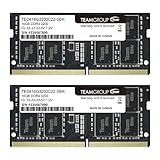
- Actual memory speed may vary depending on the system, CPU, motherboard, BIOS settings, and supported memory configuration. DDR4 3200MHz modules may operate at lower speeds such as 2933MHz or 2666MHz when supported by the host system. Please check your device specifications and compatibility before purchase.
- Adherence to JEDEC and compliance to RoHS with respect to environmental protection regulation, production and manufacturing
- All new generation product of DRAM module. Strict test and verification procedures are performed for products
- Lifetime warranty and Free technical support
- Installation video is attached in product image. ※Refer to the latest version on the official website. In case of discrepancies, the official website prevails.
When reporting the issue, save the application name, date and time, exception code, faulting module, and what action triggered the crash. Repeated, specific records are more useful to browser, software, or device support than the code alone.
Repair Windows system files
If multiple Windows applications are unstable, or browser-level troubleshooting has failed, use Microsoft’s supported DISM and System File Checker sequence from an elevated Command Prompt—a Command Prompt opened with administrator privileges.
- Open Start, search for Command Prompt, right-click it, and choose Run as administrator.
- Run DISM first:
DISM.exe /Online /Cleanup-image /RestorehealthWait for it to finish. Then run:
sfc /scannowDo not close the window until SFC reaches 100 percent. Microsoft says DISM repairs the Windows component image, while SFC scans protected system files and replaces corrupted files when possible. The complete instructions and possible result messages are in Microsoft’s System File Checker repair guide.
Restart Windows after the scans complete and test the affected application again. If the tools report that they could not repair files, record the exact message rather than repeatedly running unrelated cleanup utilities.
Investigate drivers and security software carefully
Consider what changed immediately before the crashes began. Relevant changes can include a graphics or chipset-driver update, antivirus or firewall update, VPN installation, browser overlay, screen-recording tool, hardware-monitoring utility, or other software that injects code into applications.
Use this order:
- Update the suspected software through its official vendor or Windows Update channel.
- If the timing strongly implicates a recent change, use the vendor’s supported rollback or uninstall process.
- Test in a controlled way, with a restore or rollback plan.
- Restore normal security protection immediately after any temporary test.
Do not permanently disable antivirus protection. Do not install random “driver updater” utilities or registry cleaners. A driver problem should be investigated by identifying the affected hardware and obtaining the driver from Windows Update or the computer/component manufacturer whenever possible.
Independent reader supportYour contribution helps us test, update, and keep practical guides available for everyone.When hardware or memory testing is justified
Although the exception involves invalid memory access, the code alone is not evidence of defective RAM. Hardware testing becomes more reasonable when:
- Several unrelated programs crash, not just one browser.
- The problem continues after testing a clean browser profile and repairing Windows components.
- You see blue screens, freezes, spontaneous restarts, corrupted files, or other system-wide instability.
- A crash began after a hardware change, overclock, power problem, or major system upgrade.
Use a reputable built-in or manufacturer-provided memory diagnostic and record the exact test and result. If a diagnostic reports a problem, confirm the result according to the computer or memory manufacturer’s instructions before buying replacement parts.
Replacement RAM is model-specific: desktop and laptop memory are not interchangeable in general, and the correct generation, capacity, speed, form factor, and compatibility must be confirmed. Do not replace memory merely because Chrome displayed STATUS_ACCESS_VIOLATION once.
Best Value

- Boosts System Performance:64GB DDR4 laptop memory RAM kit (2x32GB) that operates at 3200MHz, 2933MHz, or 2666MHz to improve multitasking and system responsiveness for smoother performance
- Easy Installation: Upgrade your laptop RAM with ease—no computer skills required Follow step-by-step how-to guides available at Crucial for a smooth, worry-free installation
- Compatibility Guaranteed: Ensure seamless compatibility with your laptop by using the Crucial System Scanner or Crucial Upgrade Selector—get accurate recommendations for your specific device
- Trusted Micron Quality: Backed by 42 years of memory expertise, this DDR4 RAM is rigorously tested at both component and module levels, ensuring top performance and reliability
- ECC Type = Non-ECC, Form Factor = SODIMM, Pin Count = 260-pin, PC Speed = PC4-25600, Voltage = 1.2V, Rank and Configuration = 2Rx8
What not to do
- Do not rename Chrome’s executable as a supposed universal fix. The official Google troubleshooting pages do not recommend this as a generally reliable solution.
- Do not blame
ntdll.dllautomatically. A Microsoft DLL may be where Windows detected the failure, not where the underlying corruption began. - Do not use registry cleaners as a default remedy. They can introduce new problems while providing no established fix for this exception.
- Do not install unverified driver-updater tools. Identify the hardware and use official update or rollback channels first.
- Do not permanently disable antivirus or firewall protection. If security software is a serious suspect, perform only a controlled temporary test and restore protection immediately.
- Do not assume reinstalling Chrome will fix a system-level crash. Reinstall only after simpler browser and system checks, or when Chrome cannot remain open long enough to use its settings.
When to contact support
Contact Chrome or Edge support when the crash is limited to one browser, persists in a clean profile with extensions disabled, and survives updates or a supported reinstall. Include the browser version, Windows version, affected URLs or actions, whether Incognito and another browser work, and any crash-log details.
Contact the computer manufacturer or a qualified technician when several programs fail, hardware diagnostics report errors, blue screens or file corruption appear, or the system remains unstable after Windows repair. If the computer is managed by an employer or school, contact its administrator before repairing Edge, changing security software, or installing drivers; organizational policies may restrict those actions.
Frequently Asked Questions
Is STATUS_ACCESS_VIOLATION caused by bad RAM?
Not necessarily. The code means that a process attempted to access an inaccessible memory location. A browser defect, extension, corrupted profile, security conflict, driver, or Windows problem can produce the same exception. Test hardware when crashes affect multiple applications or are accompanied by broader system instability.
Why does Chrome show STATUS_ACCESS_VIOLATION on only one website?
A page-specific crash can involve that site’s content or stored site data, although it may also expose a browser or extension defect. Test the site in Incognito, disable extensions, and clear data for that site before resetting the whole browser.
The Tool Desk
Outbyte PC Repair FREERepair Windows errors before they cause bigger problemsFix Now →Outbyte Driver Updater FREEFix the driver behind crashes, sound loss and screen glitchesFind Drivers →Does ntdll.dll mean Windows is damaged?
No. Microsoft explains that system modules such as ntdll.dll, kernel32.dll, or kernelbase.dll may be victims of corruption or an invalid operation caused elsewhere. Treat the module as a diagnostic clue, not proof of the root cause.
Should I reinstall Chrome immediately?
No. First test Incognito, disable extensions, clear relevant data, reduce memory pressure, restart, and update Chrome and Windows. Reinstall Chrome later if it cannot stay open or browser files appear damaged; reinstalling will not necessarily fix a driver, security-software, Windows, or hardware problem.
What should I do if every browser and application crashes?
Broaden the investigation beyond Chrome: review Windows crash records, run DISM followed by SFC from an elevated Command Prompt, investigate recent driver or security-software changes, and consider reputable memory or manufacturer diagnostics if system-wide symptoms continue.
The Bottom Line
Bottom line: treat STATUS_ACCESS_VIOLATION as a symptom. For a Chrome-only crash, start with Incognito, extensions, site data, memory pressure, updates, and a clean profile. If the failure spreads to other applications, use crash records, repair Windows with DISM and SFC, investigate drivers and security software, and test hardware only when the wider symptoms justify it.
Quick Recap
Product prices and availability are accurate as of the date/time indicated and are subject to change. Any price and availability information displayed on Amazon at the time of purchase will apply.

